If you’re trying to figure out how to get a bartending license in New Jersey, the process is easier than most people think.
The good news is that New Jersey does not require a state-issued bartending license to work as a bartender. However, that doesn’t mean you should skip training altogether. In fact, many NJ bars and restaurants prefer or require alcohol server certification for legal and safety reasons.
This 2025 guide will walk you through everything you need to know about getting certified (often called a bartending license) in New Jersey, from state and local requirements to the steps, costs, and benefits of training.
Bartending is an attractive career – offering flexible hours, social work environments, and lucrative tips. It’s also growing: the U.S. bartending profession is projected to grow 9% from 2023 to 2033, adding tens of thousands of jobs. No formal college education is required to tend bar, and most bartenders learn mixology skills on the job.
However, being educated in responsible alcohol service is increasingly important. Let’s clarify what a bartending license means in New Jersey and how to get one to boost your hiring prospects while serving safely.
Do You Need a Bartending License in New Jersey?
In this guide, we’ll explain exactly how to get a bartending license in New Jersey, even though the state does not mandate formal licensing.
New Jersey law does not mandate a statewide bartending license or alcohol server permit for bartenders. In other words, the state government won’t issue you a “bartender license.” To legally serve alcohol, the primary requirement is that you are at least 18 years old (21 to bartend in some other states, but 18 is sufficient in NJ).
There is also a law that you must not have certain felony convictions related to moral turpitude; otherwise, you’d need to obtain a rehabilitation permit from the state ABC. But generally, there’s no special test or state bartending card you must get before you can work.
Quick Summary
- No statewide license required
- Some cities require a Bar Card
- Training is strongly preferred by employers
- Certification improves hireability & safety
Local Bar Card Requirements in New Jersey (Hoboken, Jersey City & More)
However, New Jersey defers some alcohol rules to local authorities, and several municipalities have their own bartender licensing ordinances. In certain cities – notably Hoboken, Jersey City, Atlantic City, and a few others – bartenders and servers are required to obtain a local “ABC Bar Card” (also known as an Alcoholic Beverage Control card) to work in liquor-serving establishments.
For example, Hoboken insists that anyone serving alcohol be registered and fingerprinted through the police department’s ABC unit, with a small fee (around $50-150) for a bartender ID card.
Jersey City has its own version of a bar card, which in practice is tied to each employer and renewed yearly. These local permits are primarily about background checks and tracking who is authorized to work in liquor-licensed venues – they are not actual training programs.
As one New Jersey bartender lamented on an online forum, getting an ABC card can feel like “inky fingers and a $40 fee” with “no safe serving guidelines outlined”. In other words, the local “bartender license” is usually just paperwork, without any alcohol safety training included.
Bottom Line: State vs. Local Requirements
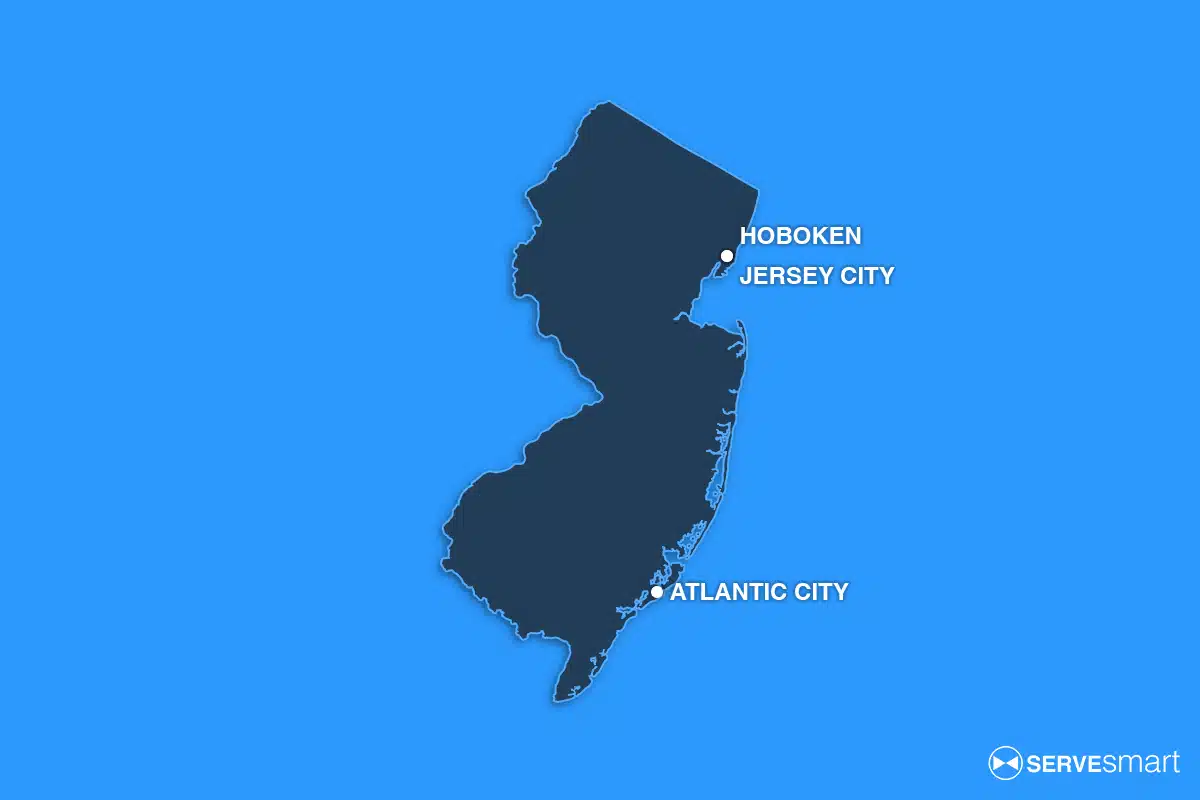
While New Jersey doesn’t require a state bartending license, some cities do require a local Bar Card through the police or city clerk. If you plan to work in places like Hoboken, Jersey City, or Atlantic City, expect fingerprinting, a background check, and a small fee for a municipal bartender ID. Outside those cities, most bartenders won’t need a Bar Card at all.
Even though New Jersey doesn’t mandate alcohol server training, many employers and insurance companies still expect it. In the next section, we’ll break down the difference between bartending school and a professional alcohol server certification, and why getting certified is strongly recommended for New Jersey bartenders.
City-Specific Bar Card Requirements
| City / Municipality | Is a Bar Card Required? | Process & Requirements | Cost / Renewal | Notes |
|---|---|---|---|---|
|
Yes |
Apply through Hoboken Police ABC Unit; fingerprinting required |
~$50–$150 initial; valid 2–3 years |
Primarily a background check; no alcohol training included |
|
|
Yes |
Application through local police; tied to each employer |
Fee varies; renewed yearly per employer |
Card must be reissued if you change jobs |
|
|
Yes |
Local ABC permit issued through city; background check required |
Varies; typically annual |
Commonly required due to tourism & casino regulations |
|
|
Other NJ Municipalities |
Varies |
Check with local police or city clerk |
Varies |
If a Bar Card exists, it is administrative only (no training) |
Summary: Only a handful of New Jersey cities require a local Bar Card, and these permits are mostly administrative; they involve background checks, fingerprinting, and registration, not alcohol safety training. If you work outside these municipalities, you typically won’t need a Bar Card at all, though employers may still require alcohol server certification.
Bartending License vs. Bartending School (What’s the Difference?)
It’s easy to get confused by terminology. You might see ads for bartending schools that promise a “NJ bartending license upon completion” for hundreds of dollars, or hear bar owners talk about needing a “server certification.” Let’s break down the key differences:
| Option | Time | Cost | Pros | Cons |
|---|---|---|---|---|
|
Online (ServeSmart) |
2–3 hrs |
$9.99 |
Mobile-friendly, instant cert, 99% pass rate |
No hands-on mixology |
|
Bartending Schools |
1–6 weeks |
$200–$800 |
Claims job placement |
Reddit users claim these to be “scams” – no legal weight |
|
TIPS / ServSafe |
4–8 hrs |
$35–$50 |
Nationally known |
Overkill for NJ’s needs |
Bartending License (Alcohol Server Certification):
In practice, a “bartending license” usually refers to a certificate from a responsible alcohol server training course.
It’s not a license from the state, but rather a document proving you completed an approved training on safe alcohol service, things like how to check IDs, prevent underage sales, recognize intoxication, and understand New Jersey liquor laws. These courses are typically short (around 2 hours), affordable (often $10–$40), and can be done 100% online.
When you pass the course exam, you get a certificate (often valid for 2–3 years) that you can show employers. This is voluntary in NJ statewide, but many bars require it for new hires to reduce liability. It’s sometimes colloquially called a license or permit – but it’s really a training certification. (For example, TIPS certification is one well-known type of server training accepted in NJ.)
Bartending School (Mixology Training):
A bartending school, on the other hand, is usually a longer course (1 to 4 weeks, often 40 hours of hands-on classes) that teaches you how to mix drinks, cocktail recipes, bar setup, and customer service skills.
These programs can be quite expensive (anywhere from $200 to $800 for a comprehensive course). Graduates get a bartending certificate of completion, which can be a nice credential, but is not legally required to bartend.
Many seasoned bartenders actually argue that bartending school isn’t necessary – you can start as a barback or server and learn on the job for free.
“Most places would rather train you themselves,” as some New Jersey bartenders note. In fact, New Jersey’s hospitality industry has no official requirement for mixology training, so a $300 bartending school certificate alone doesn’t license you to serve alcohol if you haven’t met other legal requirements. Think of it as an optional career skill builder, not a license.
Liquor License (for Businesses):
Don’t confuse a personal bartending certificate with a liquor license. A liquor license is what a bar or restaurant owner needs to obtain from the state to legally sell alcohol on the premises. It’s expensive and involved, and as a bartender employee, you do not need to get a liquor license yourself – that’s for the business owner. Your focus is on the personal certification/training side.
In short, to get hired as a bartender in NJ, you don’t need a diploma from bartending school or a state license – but you’ll greatly benefit from an alcohol server certification. It’s the bartending “license” that employers care about. This training ensures you understand how to serve alcohol safely and legally.
As the New Jersey Licensed Beverage Association points out, having trained staff is a “win-win-win for the employees, business owners, and the community” because it creates a safer, more responsible drinking environment. Meanwhile, going to bartending school can help you practice drink-making, but it’s optional and often viewed as less crucial than being RASP (responsible alcohol server) certified.
If you’re unsure about what credentials to pursue, check out our detailed post on Bartending License vs. Certification, which dives deeper into these differences. But now, let’s assume you want to get that NJ alcohol server certificate – the next section will outline how to get certified step by step.
How to Get Your New Jersey Bartending License (Certification) – Step by Step
Getting a bartender license certificate in NJ is straightforward. Since there’s no state-administered exam, the process mostly involves choosing an approved course and completing it. Here’s a step-by-step roadmap:
Step 1: Meet the Basic Requirements
Before pursuing training, ensure you meet New Jersey’s basic legal requirements for bartenders: age and background.
- Age: You must be 18 or older to serve or sell alcohol in NJ (even though you must be 21 to drink alcohol).
- Criminal Record: Typically, you should have a clean record regarding serious criminal convictions (particularly those involving violence or moral turpitude). If you do have a past conviction in that category, you may need to apply to the state ABC for a special work permit. For the vast majority of people, however, it’s a non-issue.
There are no residency or citizenship requirements specific to bartending – as long as you can legally work in the U.S. and meet the age requirement, you’re eligible to bartend in NJ.
| Requirement | Details |
|---|---|
|
Age |
Must be 18+ to serve alcohol |
|
ID |
Valid government-issued photo ID (driver’s license, passport) |
|
Criminal Record |
No felony convictions that bar alcohol service (per municipal background checks) |
📍 Note for Hoboken, Jersey City & Atlantic City
Some NJ cities run their own Bar Card systems with fingerprinting fees, processing times, and renewal rules. Hoboken’s card lasts 2–3 years and is transferable, while Jersey City’s must be renewed per employer. These steps typically happen after you’re hired, so ask your bar manager which city rules apply.
Step 2: Enroll in an Alcohol Server Training Course
Next, you’ll want to sign up for a New Jersey-compatible alcohol server training program – this is the core of getting “licensed” to bartend. New Jersey’s Division of Alcoholic Beverage Control (ABC) does not directly certify courses, but it provides guidelines that many nationwide programs adhere to. Look for a reputable, state-specific course that covers New Jersey law. Important features to look for:
Comprehensive Curriculum:
The course should cover ID checking, preventing service to minors or intoxicated patrons, New Jersey alcohol laws, and intervention techniques. These are standard topics in responsible beverage service training. For example, a good course will teach you how to spot a fake NJ ID, how to cut off a drunk customer diplomatically, and what the legal BAC limits and penalties are in NJ.
State-Specific Content:
Ideally, the training includes details specific to New Jersey’s regulations (like the state’s legal drinking age, penalties for serving intoxicated persons, local dram shop liability rules, etc.). New Jersey has a somewhat unique system where training is voluntary but strongly encouraged – the program should reflect that context.
Accredited Provider:
Choose a well-known provider such as ServeSmart, TIPS, ServSafe, or Serving Alcohol Inc. These are widely recognized by employers. For instance, ServeSmart offers a New Jersey Bartending License online course that is tailored to NJ rules and is mobile-friendly. TIPS (Training for Intervention Procedures) is another popular program; it’s accepted statewide and even required by many hospitality employers and insurance companies in NJ, according to the official TIPS training site.
Online Convenience:
In 2025, there’s no need to sit in a classroom unless you prefer it. New Jersey allows 100% online training for alcohol servers. Online courses let you go at your own pace, and they’re typically mobile-friendly. This is great if you’re juggling other jobs or school.
Quick Completion:
Most courses in NJ take about 2 hours of study time and then a final exam. You can often start and stop, and complete it in one evening or split over a couple of days.
Affordable Cost:
Price is another factor. You shouldn’t have to pay an arm and a leg. Many online NJ server courses cost between $10 and $25. For example, ServeSmart’s NJ certification is currently $9.99, and TIPS online is around $40. According to industry guides, New Jersey bartending certification typically costs ~$15 on average. Be wary of any program charging hundreds – those might be full bartending schools or packages you don’t actually need.
Once you’ve picked a program, register and pay the course fee. You’ll create a login and be ready for the training material.
Step 3: Complete the Training Modules
After enrolling, you’ll go through the course content. Pay attention – this isn’t just a formality; the knowledge here is genuinely useful for your job. Courses usually break the material into modules or lessons. In a New Jersey-focused server training, you can expect lessons on:
New Jersey Alcohol Laws & Penalties:
An overview of the ABC regulations, what happens if you serve a minor or overserve someone (for you and the establishment), and any municipality-specific rules. (For instance, you’ll learn that serving alcohol to a minor in NJ can result in hefty fines and that police stings do happen, so compliance is key.)
ID Verification Techniques:
How to thoroughly check driver’s licenses or other IDs. New Jersey accepts various forms of ID (driver’s license, state ID, passport, military ID, etc.) and recommends carding anyone who looks under 30. Training will show you security features on IDs and common tricks people use with fakes.
Preventing Underage Sales:
Strategies to refuse service to someone under 21 diplomatically, handling situations like confiscating a fake ID or dealing with a group where one member is underage.
Recognizing Intoxication:
How to tell when a patron has had too much, the stages of intoxication, and how alcohol affects the body. This includes learning to gauge a customer’s impairment level and not solely counting drinks.
Handling Intoxicated Patrons:
Techniques for cutting someone off and not over-serving, safe ways to intervene and/or get them home safely. Role-playing scenarios might be described, like what to do if a drunk customer insists on another round.
Safe Serving Practices:
Measures like spacing out drinks, offering water and food, monitoring drink strength, etc., to keep customers safe.
Liability and Dram Shop Laws:
New Jersey’s dram shop law holds establishments (and sometimes servers) civilly liable if they serve someone visibly intoxicated who then causes injury (e.g., drunk driving accident). Training emphasizes how to protect yourself and your bar from liability by following responsible practices.
Social Responsibility & Customer Service:
Tips on maintaining a safe yet friendly atmosphere, dealing with difficult patrons, and understanding the social impact of alcohol service.
The course might include videos, interactive quizzes, and real-world case studies. Many programs have practice questions at the end of each module to prep you for the final exam. Feel free to take notes, although most online courses let you review material as needed.
Most importantly, absorb the information; it will make you a more confident bartender. As one NJ bar manager put it, “I can teach you to make a Manhattan, but I need you to already know how to card a customer and handle someone who’s had too much.” The training ensures you do.
Course Modules (2–3 hrs total)
| Module | Key Takeaways |
|---|---|
|
1. NJ Alcohol Laws |
ABC rules, dram shop liability |
|
2. ID Checking |
Spotting fakes, minor sales |
|
3. Intoxication Signs |
BAC math, refusal scripts |
|
4. Intervention |
De-escalation, cutting off patrons |
|
5. Effects of Alcohol |
Short/long-term health impacts |
|
6. Final Exam |
25 questions, 70% to pass, 3 attempts |
Pro Tip:
Use the printable workbook to quiz yourself — 99% of students pass on attempt #1.
Step 4: Pass the Final Exam
When you finish the educational modules, there will be a final exam or test.
In New Jersey-oriented courses, this exam typically has around 25 multiple-choice questions, and you might need a 70% score or higher to pass. Don’t be too nervous; if you’ve read the material, the test is very fair.
Questions will cover the core topics (legal age, signs of intoxication, how to refuse service, etc.). An example question might be, “What is the correct action if you suspect an ID is fake?” or “At what BAC level is a person legally intoxicated in NJ?”.
Many online courses allow you multiple attempts if you don’t pass on the first try (often up to 2 or 3 retakes). And some provide a review of the questions you missed so you can study up before trying again. The goal is to ensure you truly grasp the material. In fact, reputable providers boast pass rates over 90% since the course prepares you well.
Once you achieve a passing score, congratulations! You’ve essentially earned your New Jersey bartending license (certificate)!
Step 5: Download and Print Your Certificate
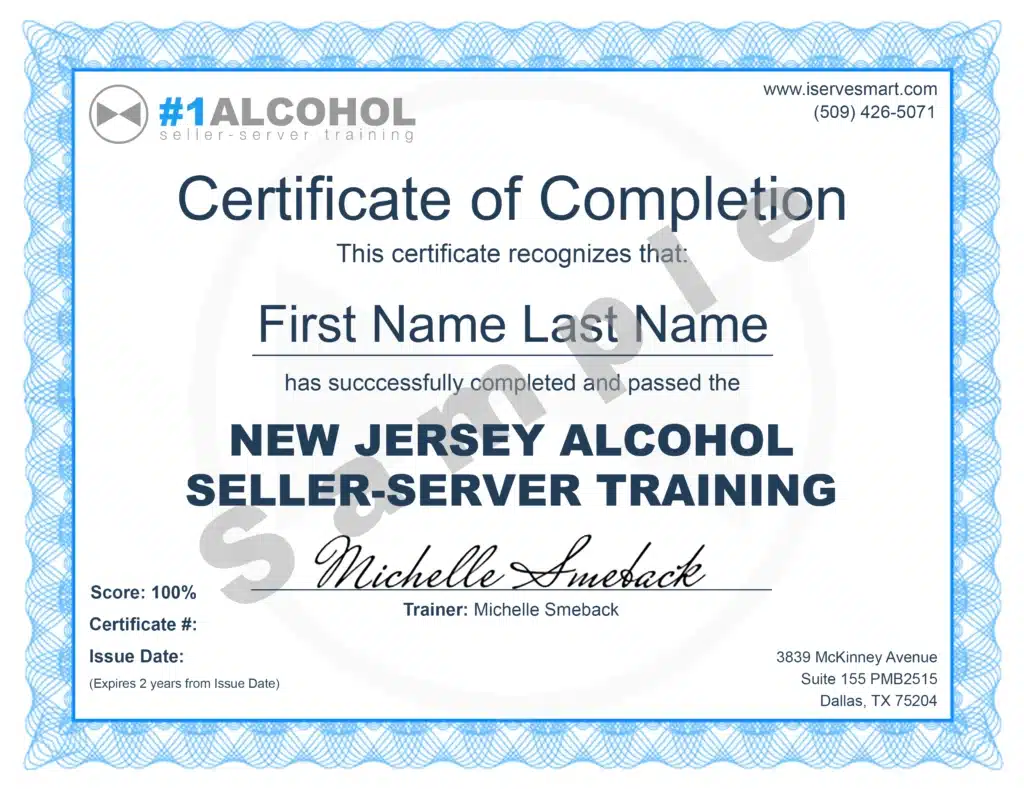
After you pass the exam, you can immediately download your certification.
Most online courses instantly generate a PDF certificate with your name, the course title (such as “New Jersey Alcohol Server Training”), the completion date, and a unique certificate ID. Save this PDF and print a couple of copies. Many New Jersey employers will keep a printed copy on file in case liquor inspectors or insurance auditors request proof of staff training.
Certificate Validity & Renewal
In New Jersey, training certificates are typically valid for 2 years from the issue date. After that, you’ll need to take a refresher course to stay current, since alcohol laws and best practices can change. Mark your renewal date on your calendar. Some training providers also send reminder emails when your renewal date approaches.
Do You Need to Submit Your Certificate to the State?
No. You do not need to submit your certificate to any state agency. The New Jersey Division of Alcoholic Beverage Control does not register or track individual bartender certifications — your certificate is strictly for you and your employer’s records.
If you’re applying for a local Bar Card, your city may ask to see proof of training as part of the application. Requirements vary by municipality, but having your certificate ready is always helpful.
Using Your Certificate Beyond New Jersey
Your certification also acts as a transferable credential if you work catered events or move to another state. While you may eventually take that state’s specific course, employers appreciate seeing a history of responsible alcohol service training.
You’re Ready to Work
By this point, you’ve completed both sides of “getting licensed” in New Jersey:
- Obtaining your responsible alcohol server training, and
- Understanding any local Bar Card requirements.
You’re now ready to bartend safely and legally anywhere in the Garden State.
Why Get Certified if It’s Not Legally Required? (Benefits of Training)
You might be thinking: if New Jersey doesn’t require a bartending license, why spend time and money getting one? There are several compelling reasons to become a certified bartender in NJ, even when it’s voluntary:
🌟 Boost Your Hireability:
The hospitality scene in Newark, Jersey City, and the Jersey Shore is highly competitive. Having an alcohol server certification on your resume gives you an immediate edge.
Many job listings mention “TIPS certification required or preferred,” especially on sites like Indeed or in postings from venues such as Farmers & Bankers Brewing. Bars want staff who can serve safely from day one.
ServeSmart’s New Jersey bartending guide notes that “employers prefer applicants with training in responsible alcohol service and ID verification.” Certification signals professionalism and readiness. When two applicants have similar skills, the certified candidate is usually chosen because the bar doesn’t have to teach the basics.
⚖️ Reduce Legal Liability for You and Your Employer:
Liquor liability is real in NJ. Dram shop laws can hold bars responsible for serving minors or visibly intoxicated guests. Training teaches you how to prevent these situations.
Some insurance carriers won’t cover a bar unless all serving staff are trained. Many reference programs like TIPS because certified employees are statistically safer and make fewer costly mistakes.
Insurers often give 10–25% discounts on liquor liability policies when staff hold recognized certifications. Showing up already trained saves your employer money and positions you as a lower-risk hire. In some areas, training can even reduce penalties if a violation occurs.
🏛️ Compliance with Local Rules and Industry Standards:
While only a few NJ cities (like Hoboken and Jersey City) require a local Bar Card, many employers expect staff to complete responsible service training, even when not mandated by the city.
The state’s Licensed Beverage Association supports this trend. Their NJ BRASS initiative promotes standardized training across bars and restaurants. The shift is especially noticeable in high-tourism areas.
In Atlantic City and the Shore resorts, most casinos, hotels, and upscale bars require certification as a condition of employment. Getting trained now keeps you aligned with industry expectations and prepared if state rules evolve.
🍻 Improved Skills = Better Service (and Tips!):
Training isn’t just paperwork. It teaches useful, real-world skills that make you better behind the bar.
You’ll learn how to check IDs confidently, spot fakes, and recognize intoxication warning signs. You’ll know how to handle difficult guests and cut off service professionally. Understanding how different drinks affect people also helps you pace service safely.
These skills improve the guest experience. Customers who feel safe and well cared for tend to stay longer, tip more, and return often.
Certification also protects your bar’s reputation. Knowing alcohol laws can prevent violations and fines, which keeps the business stable. Many bartenders say training gives them confidence and clarity during tricky situations, a quality managers often notice when considering promotions.
🤝 Community Safety and Reputation:
Responsible serving protects more than just your workplace. It helps keep your community safe. Cutting someone off at the right moment or arranging a safe ride can prevent serious harm.
Bars known for good ID practices and safe service earn stronger reputations and face fewer legal issues. These establishments tend to stay in business longer and maintain more loyal customers.
As a trained bartender, you play a real part in public safety — a point worth mentioning in job interviews. It shows maturity and professionalism.
The Bottom Line — Certification Pays Off
Getting your bartending certification in New Jersey is a small investment with big returns. The ~$15 course fee is often earned back in a single night of tips.
More importantly, you’ll step behind the bar with knowledge that reduces liability risks and helps prevent alcohol-related incidents. Demand for trained bartenders continues to rise statewide, and industry groups like the New Jersey Licensed Beverage Association highlight the importance of responsible service.
Training makes you more confident, more employable, and better prepared for long-term success in the hospitality industry.
FAQs
Is a bartending license required in New Jersey?
No. New Jersey does not require a statewide bartending license or alcohol server permit. Anyone 18 or older can legally bartend without a state-issued license. However, many employers still expect or require staff to complete an alcohol server training course, which is often referred to casually as a “bartending license.” These certifications cover safe alcohol service, ID checking, and liability awareness, all things bars want new hires to understand.
A few New Jersey municipalities have their own rules. Cities such as Hoboken, Jersey City, and parts of Atlantic City require bartenders to obtain a local Bar Card, issued through the police or city clerk. This is separate from training and usually involves fingerprinting, a background check, and a small fee.
So while the state doesn’t mandate training, the job market often does. If you want a strong chance at landing a bartending job, plan to get certified and verify whether the city you work in requires a Bar Card.
What is an ABC Bar Card, and do I need one in NJ?
A Bar Card is a local permit issued by certain New Jersey municipalities through their Alcoholic Beverage Control (ABC) office. It’s essentially a registration card confirming you’re approved to work in a bar within that city. Towns such as Hoboken and Jersey City require Bar Cards for anyone serving alcohol.
Getting a Bar Card usually involves:
- An application through the local police department
- Fingerprinting and a background check
- A municipal fee (typically $20–$50/year, sometimes higher for multi-year cards)
Bar Cards do not include alcohol safety training; they are administrative permits only. Whether you need one depends entirely on where you work. If your job is in a town without a Bar Card ordinance, you don’t need one at all. If your job is in a city that requires it, your employer will tell you how to apply.
Working without a required Bar Card can lead to fines during inspections, so always confirm local rules before starting a job.
How much does a New Jersey bartending license cost?
The cost of getting certified in New Jersey is low compared to other professional credentials. Online alcohol server training courses typically range from $10 to $30, depending on the provider. Many reputable New Jersey programs are priced under $20, making this one of the most affordable ways to boost your job prospects.
Local fees vary if the town you work in requires a Bar Card. For example:
- Jersey City: around $20 per year
- Hoboken: roughly $50–$115, depending on fingerprinting and processing
- Other towns: fees vary or may not require a card at all
Bar Card fees are set by the municipality, and some employers reimburse these costs.
Compared to bartending schools, which can cost $200–$800, getting certified and compliant in New Jersey is extremely inexpensive. Most bartenders spend under $50 total for both training and any required local card.
Does New Jersey accept TIPS certification?
Yes. TIPS is widely recognized across New Jersey even though the state does not mandate any specific training program. Many bars, restaurants, hotels, and casinos prefer or require TIPS certification because it’s well known and emphasizes liability prevention, intoxication recognition, and ID verification.
Because New Jersey does not maintain its own approval list, employers generally accept reputable national programs such as TIPS, ServSafe Alcohol, and ServeSmart, as long as they include New Jersey–specific law content.
Some insurance companies also require or strongly recommend TIPS certification as a condition for covering a bar or restaurant. For workers, this makes TIPS a strong credential when applying for jobs.
TIPS certifications in New Jersey are typically valid for 3 years before requiring renewal. Other training providers may use a 2-year renewal cycle, so always check your certificate’s expiration date.
Do I have to renew my bartending certification in NJ?
Yes. Since New Jersey does not issue a state license, there is no statewide renewal policy — but training certificates expire based on the provider’s rules. Most alcohol server certifications are valid for 2 to 3 years. ServeSmart and ServSafe typically use a 2-year cycle, while TIPS certifications are often valid for 3 years.
Renewal is simple: you retake the course (or a shorter refresher if offered) and pass the exam again. Renewing is important because alcohol laws, ID standards, and best practices change over time, and employers want staff who are up to date.
Note that Bar Cards and training certificates are separate. A municipal Bar Card has its own expiration and must be renewed through the city’s process. Renewing your training does not renew your Bar Card, and vice versa.
If your certificate is expiring soon, aim to renew before applying to new jobs — current certification increases your hiring chances.
I have a bartending license from another state, is it valid in New Jersey?
Not officially. New Jersey does not issue or recognize a statewide bartending license, so there’s no reciprocity with other states. If you completed alcohol server training in a state like New York, Pennsylvania, or California, that certificate shows you trained in that state’s laws, but New Jersey employers will still expect you to understand NJ-specific regulations.
That said, having an out-of-state certification is still helpful. It shows you have a foundation in responsible alcohol service and makes learning NJ rules easier. Some employers may allow you to start work with your old certificate temporarily, but most will ask you to complete a New Jersey–focused training course soon after.
If your previous certification is from a national program like ServSafe Alcohol, some employers may accept it initially. But to be fully compliant and competitive, plan to take a New Jersey–specific course.
Can I bartend in NJ without any experience or training at all?
Legally, yes. New Jersey does not require training or licensing to bartend, so an employer could hire someone with zero experience as long as they’re 18 or older. But in practice, getting hired with no training is increasingly difficult.
Most bars prefer candidates who either:
- have prior bartending or barback experience, or
- have completed a recognized alcohol server training course
Completing a short online course can make up for a lack of experience by proving you understand the legal basics of serving alcohol. It also gives you confidence in ID checking, spotting intoxication, and avoiding liability issues, all of which employers value.
If you have no experience at all, it’s common to start as a barback or server and work your way up. Training helps accelerate that process.
In short: yes, you can bartend without experience or training, but you’ll land jobs faster and keep them longer if you get certified first.
Career Boost: Jobs That Hire with Your Certificate
| Job | Avg. Hourly (NJ DOL, 2025) | Tips Potential |
|---|---|---|
|
Bartender |
$21.62 |
$200–$500/night |
|
Server |
$15.00 |
$150–$300/shift |
|
Bar Manager |
$26.91 |
Salary + bonus |
|
Casino Server |
$20.00 |
High-volume tips |
Resume Line:
“NJ Responsible Alcohol Server – ServeSmart (Valid thru 11/2027)”
Conclusion:
By now, you should have a clear understanding of how to get your New Jersey bartending license, your alcohol server certification, and what the process looks like in 2025. Even though certification isn’t required statewide, completing a reputable training program is one of the smartest moves you can make if you’re serious about bartending in New Jersey.
It’s quick, affordable, and packed with advantages, from boosting your hireability to helping you serve alcohol safely and confidently. New Jersey’s nightlife and hospitality scene is competitive, but also incredibly rewarding for bartenders who come prepared.
Once you’re certified, simply take care of any local Bar Card requirements if your city has them. With your training certificate in hand, you’ll be ready to step behind the bar and work in restaurants, lounges, casinos, hotels, shore venues, and private events anywhere in the state.
Cheers to your journey as a certified New Jersey bartender! 🥂
Stay safe, have fun, and may your shifts be smooth and your tips be generous.