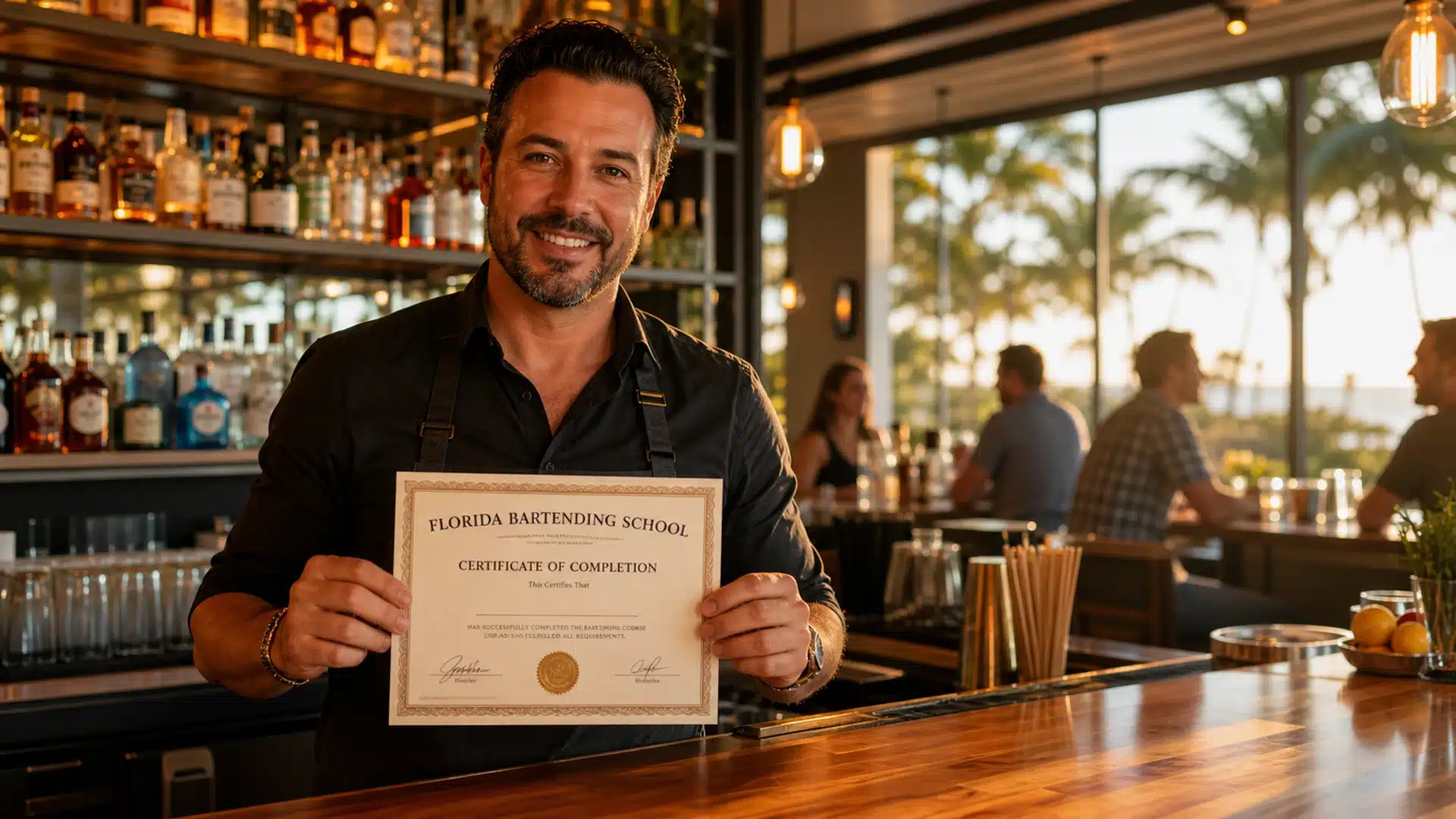
If you’re starting a new job in Texas food service, at a restaurant, bar, café, food truck, school cafeteria, or any place that handles food, you’ll likely need a Texas Food Handlers license within 30 days of your hire date. The good news: you can get it entirely online in about 2 hours for $10.95.
Here’s exactly how to get a Texas Food Handlers license, what you need to know before you start, and how to make sure your certificate is valid and accepted by every Texas employer.
DSHS-approved · 100% online · Valid 2 years · Instant certificate
Key Takeaways
- Cost: $10.95 through ServeSmart’s DSHS-approved course
- Time: Under 2 hours from start to certificate in hand
- Format: 100% online, self-paced, mobile-friendly
- Validity: 2 years statewide
- Required by: Texas Food Establishment Rules (within 30 days of hire)
- Provider type: Must be DSHS-approved
- Result: Instant downloadable certificate (also called a license or food handler card)
Step 1 — Confirm You Need a Texas Food Handlers License
Before you enroll, make sure this is the right credential for your situation. Most Texas food workers need it, but a few important specifics:
You need a Texas Food Handlers license if:
- You handle food, beverages, utensils, or food-contact surfaces in any Texas food establishment
- You work as a server, cook, prep cook, busser, dishwasher, host (touching food), barista, or restaurant manager
- You work at a food truck, catering operation, school cafeteria, hospital, or grocery deli
- You start a new food service job (you have 30 days from your hire date to complete training)
You may not need this specific license if:
- You only serve alcohol with no food handling — you’d need TABC certification instead. See TABC certification details →
- You’re a Certified Food Manager — that’s a separate, more advanced credential
- You work in a non-food-handling role at a food establishment (e.g., maintenance, accounting)
You probably need both:
- If you serve alcohol AND handle food (most restaurant servers and bartenders), you need both TABC certification and a Texas Food Handlers license. See the bundle option →
If you’re not sure, ask your employer. Most will tell you exactly which credentials are required for the role.
Step 2 — Choose a DSHS-Approved Training Provider
This is the most important step, because only courses from DSHS-approved providers result in valid certificates.
The Texas Department of State Health Services (DSHS) accredits the training providers who deliver food handler courses statewide. If you take a course from a non-approved provider:
- Your certificate won’t be valid
- Your employer won’t accept it
- You’ll have to retake an approved course and pay again
- You may face health inspection issues at your job
How to verify a provider is DSHS-approved:
The official list is maintained by Texas DSHS at the Texas DSHS website.. Providers must meet specific course content, exam, and reporting requirements to be approved.
ServeSmart is DSHS-approved (Provider License #249). Our online food handlers course meets every state requirement and your certificate is valid statewide.
Watch out for these red flags:
- Providers that don’t list a DSHS approval or license number
- Courses priced suspiciously low (under $5 — likely not approved)
- Sites that promise certification without an actual exam
- Out-of-state providers selling generic “food handler” courses (Texas requires Texas-specific training)
When in doubt, check that the provider explicitly states their DSHS approval and shows their license number.
Provider License #249 · Valid statewide · Instant certificate
Step 3 — Complete the Online Course
Once you’ve enrolled with a DSHS-approved provider, you’ll move through the training course at your own pace. Most legitimate courses take about 2 hours.
What the course covers:
The state-required curriculum includes:
- Foodborne illness prevention — how bacteria, viruses, and parasites cause illness, and how to prevent contamination
- Personal hygiene — handwashing, glove use, and reporting illness
- Time and temperature controls — the danger zone, proper cooking and holding temperatures, and reheating procedures
- Cross-contamination prevention — separating raw and ready-to-eat foods, allergen awareness, and safe storage practices
- Cleaning and sanitizing — the difference between cleaning and sanitizing, and proper procedures for surfaces and equipment
How the course is delivered:
With ServeSmart, the course is 100% online and works on any device — phone, tablet, or computer. You can:
- Start, pause, and resume anytime
- Complete it across multiple sittings if needed
- Review previous modules before the exam
- Take notes if you want to (many students don’t need to)
Most students complete the full course in 90 minutes to 2 hours of focused study.
Step 4 — Pass the Final Exam
After completing the course modules, you’ll take a final exam to demonstrate that you understood the material.
What to expect on the exam:
- Format: Multiple-choice questions
- Passing score: 70%
- Time limit: None, take as long as you need
- Open-book: Yes, you can refer back to the course material
- Free retakes: With ServeSmart, if you don’t pass on the first try, you can retake the exam at no extra cost
Tips for passing on the first attempt:
- Read each module fully before moving on
- Pay attention to specific temperatures (the “danger zone” of 41°F to 135°F is commonly tested)
- Note the difference between cleaning and sanitizing; they’re different things
- Remember handwashing requirements (after using the restroom, before food prep, after handling raw meat, etc.)
The exam is designed to confirm you understood the safety basics, not to trick you. Most students pass on the first attempt.
Step 5 — Download Your Certificate and Show Your Employer
Once you pass, your Texas Food Handlers certificate is instantly downloadable, no waiting, no mail delays.
What to do with your certificate:
- Download the PDF immediately — save it to your phone, computer, or cloud storage
- Print a physical copy — Texas health inspections require employers to keep training records on file. Most prefer a printed copy in your employee folder
- Email or share with your employer — they need it within 30 days of your hire date
- Save your login credentials — you can log back in to ServeSmart anytime to re-download a copy if you lose it
Your certificate includes:
- Your full name (as entered during enrollment)
- The completion date
- The expiration date (2 years from completion)
- The provider’s DSHS license number
- A unique certificate ID for verification
You’re now legally compliant. You can work any Texas food service shift, and your employer is covered for health inspections.
From enrollment to certificate in under 2 hours
Frequently Asked Questions About How to Get a Texas Food Handlers License
Most students complete the entire process, enrollment, course, exam, and certificate download in about 2 hours. With ServeSmart, you can start immediately after paying and have your certificate in hand the same afternoon.
ServeSmart’s DSHS-approved Texas Food Handlers course is $10.95. Other approved providers typically charge $7-$15. In-person classes can run $20-$40. The cost is the same whether you call it a license, certificate, or food handler card; it’s the same DSHS-approved credential.
Yes. The terms “Texas Food Handlers license,” “Texas Food Handlers certificate,” and “Texas Food Handlers card” all refer to the same DSHS-approved credential. Different employers and websites use different terms, but the credential is identical.
Yes. Texas DSHS approves multiple online providers, including ServeSmart. Online courses are 100% valid statewide as long as the provider is DSHS-approved. The certificate you download is the same credential you’d receive from an in-person class.
It depends on your employer. Texas law requires the license within 30 days of hire, but many employers require it before your first shift to avoid health inspection issues. Some employers won’t schedule you until they have your certificate on file.
Texas state law preempts local requirements for food handler training. A DSHS-approved Texas Food Handlers license is valid statewide, in Houston, Dallas, Austin, San Antonio, El Paso, Fort Worth, and every Texas county. You don’t need a separate city-specific course.
You may be sent home from scheduled shifts, your employer may face fines during inspections, and you risk being terminated. The 30-day rule is enforced by health inspectors, and most employers take it seriously.
Yes. Many Texas employers cover the cost as part of onboarding, especially in industries with high hiring volume. Ask before you pay out of pocket; you may be reimbursed, or your employer may have a preferred provider.
Your license is valid for 2 years from the date you complete the course. After that, you’ll need to retake an approved course to renew. There’s no shorter renewal option.
If you got your license through ServeSmart, you can log back in to your account anytime to re-download your certificate at no extra cost. There’s no need to retake the course just to reprint a lost certificate.
If your job involves serving or selling alcohol, bartending, serving at a restaurant that serves alcohol, retail alcohol sales, or alcohol delivery, yes, you’ll need TABC certification in addition to your food handlers license. Many Texas hospitality jobs require both.
See ServeSmart’s TABC + Food Handlers bundle →
Get Your Texas Food Handlers License Today
Texas law gives you 30 days from your hire date to get certified, but most employers expect you to be ready for your first shift. ServeSmart’s DSHS-approved online course is the fastest path: enroll now, finish in under 2 hours, and walk into work with your certificate already in hand.
DSHS-approved · 100% online · Mobile-friendly · Free retakes · Valid 2 years
✓ DSHS-Approved · ✓ Free Retakes · ✓ US-Based Support · ✓ Valid 2 Years Statewide
Related Resources
Texas Food Handlers License Course → See full course details, pricing options, and the bundle with TABC certification.
TABC Certification → If your job involves alcohol service, you’ll need TABC certification too. Get details on the course, requirements, and how to enroll.
How to Become a Bartender in Texas → Career guide for entering the Texas hospitality industry, including which certifications you need and when.