If you’re wondering how to get RBS certified in California, this guide will show you exactly what to do. Getting RBS certified in California is now a must for anyone who serves alcohol in the state. California’s RBS Certification Program, officially known as the Responsible Beverage Service certification, became mandatory on July 1, 2022.
In simple terms, if you’re a bartender, server, or manager at a bar or restaurant (or any venue where alcohol is served on-site), you need RBS certification to legally do your job. You can start your certification quickly through our California RBS Certification course, an approved online program designed to meet all state requirements.
This guide will walk you through who needs RBS certification and step-by-step instructions on how to become RBS certified. By following these steps, you’ll comply with state law and gain the knowledge to serve alcohol responsibly, keeping your customers and community safe.
If you’re not yet familiar with the program, learn more about what RBS certification is and why it’s required in California.
Table of Contents
Who Needs to Be RBS Certified?
Under California law, anyone who serves or handles alcohol for on-site consumption must obtain RBS certification. If you’re unsure whether your job qualifies, check our complete guide on who needs RBS training in California for a full list of positions that require certification.
The legal definition of an “alcohol server” includes anyone who:
- Checks customer IDs for entry or alcohol service (for example, a bouncer verifying age at the door).
- Takes alcoholic drink orders from customers (servers and bartenders).
- Pours alcoholic beverages for customers (bartenders, pourers at tastings).
- Delivers alcoholic drinks to customers (waitstaff, cocktail servers).
In addition, alcohol managers who hire or supervise servers must be certified as well. In short, if your job involves verifying age, serving, or overseeing alcohol service at an ABC-licensed on-sale establishment, you need RBS training.
This covers bartenders, waiters, sommeliers, nightclub security checking IDs, catering staff serving drinks, etc. (Yes, even bouncers who check IDs at the door are required to be RBS certified in California; the law counts them as alcohol servers because they control entry of patrons who will drink inside.)
Who Doesn’t Need RBS?
Staff who have nothing to do with alcohol service, like cooks, dishwashers, bussers, or general security not involved in ID checks, are not required to get certified. But when in doubt, look at the duties: if an employee might ID a customer or handle alcoholic drinks, RBS certification is the safe (and legal) bet.
Also note the timing: Newly hired alcohol servers in California have 60 days from their first day of employment to complete RBS certification. You can work during that window, but you must finish training and pass the exam within 60 days. Existing staff had to be certified by August 31, 2022, when the law first took effect. Employers are responsible for ensuring their staff comply, so most will require you to show proof of certification (or get it quickly after hire).
There are no criminal penalties for missing the deadline, but businesses can face disciplinary action and liability issues if workers serve alcohol without proper certification.
Bottom line: if you’re in a role that requires RBS, it’s crucial to get it done on time.
How to Get RBS Certified in California: Step-by-Step
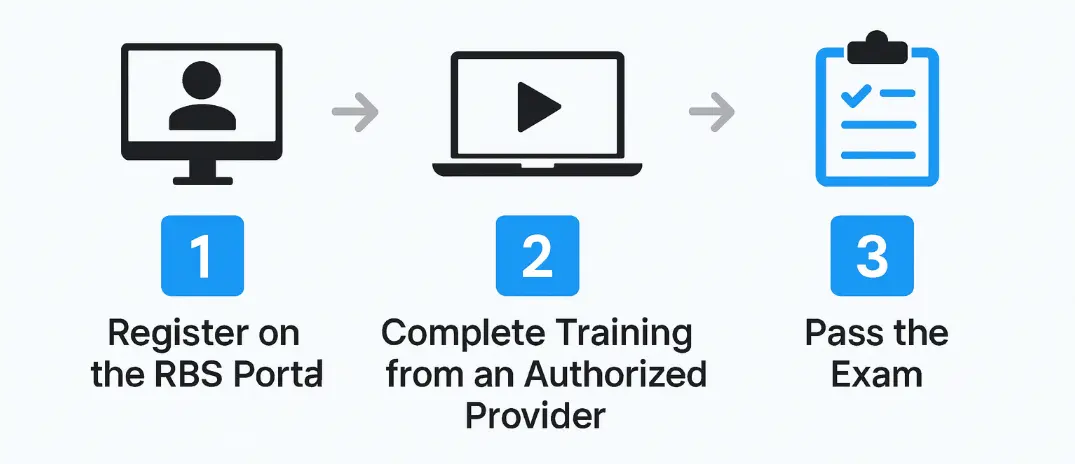
Fortunately, getting your RBS certification in California is a straightforward three-step process as outlined by the ABC. You will need access to a computer or mobile device and a payment method for small fees.
Here’s a simple breakdown of how to get RBS certified in California, from registration to passing your ABC exam.
1. Register on the California RBS Portal (ABC)
Begin by creating an online account on the ABC RBS Portal (the state’s Responsible Beverage Service portal). You’ll register as a “Server” or “Manager” and fill in your personal details. As part of registration, you must pay a $3.00 fee to the ABC. This covers the cost of your state exam and certification.
Once you’ve paid and submitted your application, the system will generate your unique RBS Server ID Number. Make sure to save this Server ID, as you’ll need it to sign up for a training course.
(Tip: The RBS Portal is on the ABC’s official website. Use a personal email you check often, since that will be your login and where exam notices are sent.)
2. Complete an Approved RBS Training Course
After registering, the next step is to take an RBS training course from an ABC-approved provider. You can find approved courses through the RBS Portal’s training provider search, or go directly to a provider’s website (the provider will ask for your RBS Server ID to enroll you in the course).
Choose any authorized course that fits your needs; many are online, self-paced courses, while some providers offer in-person classes. The training will cover California alcohol laws, how alcohol affects the body, intervention techniques to prevent overservice, checking IDs, and more. The course typically takes around 2 to 4 hours to complete, though you can do it at your own pace.
Providers may charge their own fee for the course (prices usually range from about $10 to $20). For example, the California RBS certification course offered by ServeSmart is an online, state-approved course you can finish in a few hours on your phone or computer (available in English or Spanish).
Be sure to pick a course that is officially approved for California. Once you finish all the course modules, the provider will report your course completion to the ABC within 24 hours.
3. Pass the ABC Alcohol Server Certification Exam
The final step is to take and pass the RBS exam administered by the ABC. This exam is accessed back on the RBS Portal (log in to your ABC account after the provider confirms your training completion). The exam is multiple-choice, with about 50 questions covering the material from your training.
You must score at least 70% to pass and you’ll have 3 attempts to pass the exam within 30 days of finishing your course.
If you don’t pass in three tries, you’ll need to retake the training and pay a new $3 fee to attempt the exam again, so study and take it seriously! The good news is that the training should prepare you well, and most people pass on the first try.
The exam is open-book in the sense that you can use your knowledge from the course and any notes, but you must complete it without assistance. Once you pass the exam, your RBS certification is immediately issued electronically. You won’t receive a physical card; instead, your status in the RBS Portal will update to “Certified,” and you can download a certificate PDF if needed. Your employer can verify your certification in the ABC system using your Server ID as well.
Quick recap: Register with ABC and get your Server ID, complete the online RBS course, then pass the state exam. From start to finish, you could complete the whole process in a day or two if you focus (the course + exam together might take ~4-6 hours total). California allows you up to 30 days after training to take the exam, but there’s no need to wait that long. Once you’re done, you’ll be officially RBS certified!
How Much Does RBS Certification Cost?
Getting RBS certified in California is affordable. You’ll pay a $3 exam fee directly to the California ABC when registering on the RBS Portal, plus a training provider fee (usually between $10–$20).
ServeSmart’s California RBS course costs $12.95, making it one of the most affordable and fastest options available.
How Long Is RBS Certification Good For?
After you pass the exam, your California RBS certification is valid for three years. The expiration date will be three years from the date you passed the test (you can find this in your RBS Portal account). To maintain your certification, you must renew it before it expires, basically by taking the training and exam again. The renewal process in three years will be very similar: the ABC will likely require you to redo the course (to refresh on updated laws and practices) and then pass a renewal exam for another $3 fee.
There are no shortcuts for renewal; even seasoned bartenders have to retrain because rules and best practices can evolve.
The ABC will send you reminder emails when your certification’s expiration is approaching (so keep your contact info up to date in the RBS Portal). It’s wise to renew early (before the 3-year mark) so you don’t risk a lapse in your certification. Working with an expired RBS certificate would be the same as not being certified at all, which could put you and your employer out of compliance. Many training providers offer shorter “refresher” courses for renewals, but the requirement is essentially to repeat the approved training and exam every three years.
Tip: Mark your calendar for renewal a few months in advance. Also, California’s initial wave of RBS certifications from 2022 will come due for renewal in 2025, so expect high demand for courses around that time. Don’t procrastinate, as you’ll want to stay certified continuously if you remain in the industry
FAQ: California RBS Certification
Yes. Under California law (AB 1221), anyone who serves or manages alcohol must hold a valid RBS certification. According to the Wine Institute, this requirement applies to more than 56,000 businesses across the state, including bars, restaurants, wineries, and tasting rooms.
In California, there’s no separate “bartending license.” The RBS certification is the official requirement to serve or sell alcohol. Once you complete RBS training and pass the ABC exam, you’re legally licensed to bartend.
The ABC RBS exam fee is $3, and most online RBS training courses cost between $10–$20. For example, ServeSmart’s California RBS course is $12.95. So you’ll usually pay about $15 total to get certified.
Learn more in our step-by-step guide to getting RBS certified.
Most people complete the RBS course in 2–4 hours and the exam in under an hour. You have 30 days to take the test after finishing training, and results are immediate once you pass.
✅ Many servers complete both training and exam in just one day.
You get three attempts to pass the exam within 30 days of finishing training. If you fail all three, you must retake the course and pay the $3 ABC retest fee. Most servers pass within the first two tries.
Review your RBS course materials, especially ID checking, BAC limits, and signs of intoxication. Reviewing official resources like the CDC’s Alcohol Safety Guide can help you understand the public safety goals behind the RBS certification program. Most questions come directly from the training. Use any practice quizzes your provider offers, and take your time, you have up to two hours to finish.
Conclusion
By following this guide, you now know how to get RBS certified in California and stay compliant with state law. Not only is it the law, but being RBS certified also shows employers and patrons that you take responsible alcohol service seriously. It’s a small investment of time and money that pays off in safer service and better job opportunities.
Good luck with your RBS training and exam! And once you’re certified, if you’re new to the industry, don’t forget to check out our tips on how to become a bartender in California to kickstart your career. Cheers to serving safely and smartly!