RBS compliance in California is a legal requirement under the Responsible Beverage Service (RBS) law, AB 1221. Every on-premises alcohol server and manager must complete state-approved training and pass the ABC exam to stay certified. For businesses, maintaining RBS compliance is mandatory to protect their liquor license and avoid penalties.
In this guide, we’ll break down the three simple steps to RBS compliance in California — how to register, complete training, and pass the final ABC exam.
If you need a primer on what RBS training actually is and why California passed AB 1221, see our explainer: What is RBS Certification?.
The Compliance Checklist: 3 Steps Every Business Must Take
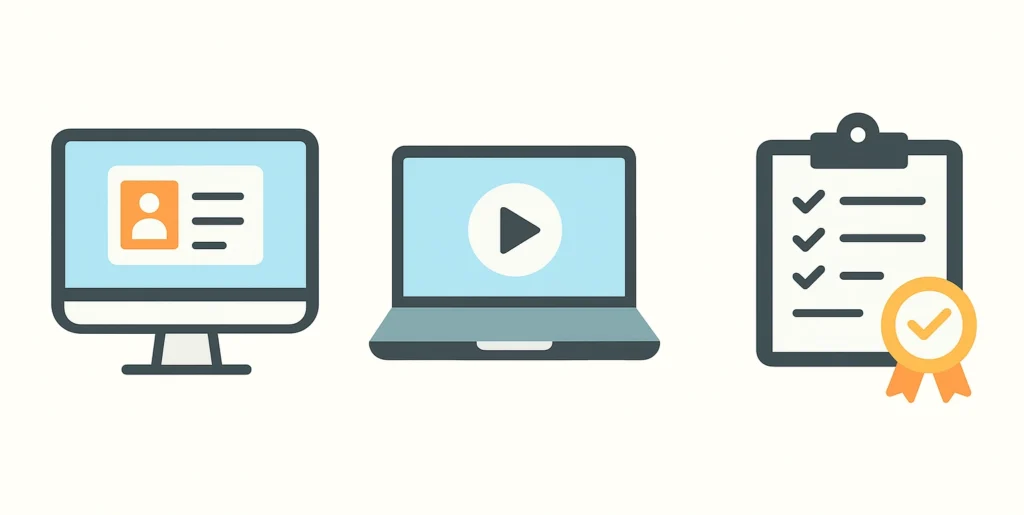
How can you make sure your bar or restaurant stays compliant? California’s RBS certification process comes down to three straightforward steps. In the next sections, we’ll walk through each one and share practical tips to help you get your team certified quickly. Follow these steps and you’ll keep your business legal, your staff confident, and your guests safe.
Step 1: Register Your Staff on the ABC RBS Portall
The first step to compliance is registering every alcohol server on the ABC RBS Portal. Registration creates an official record and issues each employee a unique Server ID number. They’ll need this ID to enroll in training and take the exam.
Each staff member must register themselves; employers can’t do it for them. The process is quick:
- Enter basic information
- Pay a $3 fee; and
- The system generates the Server ID.
Who needs to register? Any staff involved in alcohol service, from bartenders to bouncers who check IDs, must register in the RBS Portal.
For a full breakdown of job roles covered under AB 1221, see our guide: What is RBS Certification?
As a manager, your job is to make sure every new hire registers on day one. Employees have a 60-day grace period to finish certification, but tracking deadlines is your responsibility. Many owners hold a quick onboarding session where all new staff members register together, so nothing slips through the cracks.
Step 2: Enroll Staff in an Approved RBS Training Course
Once your team is registered, the next step is training. Every server must complete an ABC-approved RBS course before they can take the state exam.
Most businesses choose online training because it’s fast and flexible, typically completed in one shift. As the employer, your responsibility isn’t teaching the material, but verifying that staff complete an ABC-approved course.
For details on what the course covers (laws, ID checks, service techniques), point staff to What is RBS Certification?
As the employer, set clear expectations. Decide whether you’ll pay for training or have employees cover the cost. Many managers make it part of onboarding and require completion within the first week. Others hold a group training day so the whole staff finishes together.
When choosing a provider, confirm it’s listed on the ABC’s official portal. Using an unapproved provider means your staff can’t take the exam. For a reliable option, see our California RBS Training Course.
[Internal Note: If your venue operates in multiple states, remember that RBS is specific to California. Other states have their own alcohol server training (e.g., TABC in Texas, TIPS in some places). Always follow the local rules. For California locations, RBS is the law.]*
Step 3: Ensure Everyone Passes the ABC Certification Exam
After finishing training, your staff must pass the ABC Alcohol Server Certification Exam to become fully certified. The exam is online, multiple-choice, and designed to confirm the knowledge they just learned.
Key details about the exam:
- Format: 50 multiple-choice questions.
- Passing score: 70% or higher (35 correct).
- Attempts: Up to 3 within 30 days of training completion.
- Access: Taken through the employee’s RBS Portal account.
⚠️ Important: The 30-day countdown starts once the training provider reports completion to ABC — not when the employee first logs in. If they miss this window, they must re-register, pay the $3 fee again, and retake the training.
Your role as an employer:
- Encourage staff to take the exam right away while the information is fresh.
- Remind them it’s an open-book test; they can reference course materials and notes.
- Verify results in the ABC Licensee Portal or through your License Administrator account.
- Keep a compliance log with each employee’s Server ID, certification date, and expiration date.
When an employee passes:
- Their status updates to “Certified” in the RBS Portal (no paper certificate is issued).
- Certification lasts for 3 years from the exam date.
- You can print or save a PDF of their certification page for your records.
If an employee fails all three attempts (rare if they engage with the training), they’ll need to start the process over. To avoid that, check in with staff after their first attempt and offer support if they struggled.
👉 For more details on the exam itself, share our guide: How to Get RBS Certified in California.
Keeping Your Business RBS Compliant (Ongoing)
Getting your team certified is a big step, but compliance doesn’t end there. As a business owner, you’ll need systems to keep everyone current.
Key areas to manage:
✅ Track Certification Expiration Dates
- RBS certifications last 3 years from the exam date.
- The ABC emails reminders to employees at 90, 60, 30, and 10 days before expiration.
- If you set up a Licensee Administrator account, you’ll get notices too.
- No grace period exists — once expired, staff can’t serve until they renew.
✅ Make RBS Part of New-Hire Onboarding
- Add “Register on the RBS Portal” to your new hire checklist.
- Employees get 60 days from their first shift to finish training and the exam.
- Best practice: require portal registration on Day 1 and set a training deadline within the first week.
✅ Maintain Proof of Certification
- Keep a simple log with Server IDs, certification dates, and expirations.
- Print or save PDFs of employee certification pages from the ABC Portal.
- Add staff to your Licensee Roster so ABC can connect them to your business.
✅ Support Staff Through Renewal
- Encourage employees to take a renewal course before their certification expires.
- Many providers offer shorter refresher courses.
- Set internal reminders 90 days out to avoid last-minute issues.
✅ Stay Current on ABC Updates
- Rules can change, subscribe to ABC updates, or check their site quarterly.
- Make RBS compliance part of your standard license management, like renewing your liquor license or food handler permits.
Bottom line: RBS compliance is ongoing. By tracking deadlines, making certification part of onboarding, and keeping records organized, you’ll keep your business protected year after year.
Lead by Example
Finally, don’t forget to lead by example. If you serve alcohol or supervise servers, you also need to be RBS certified. Keeping your own certification current shows your team that compliance and responsible service start at the top.
Many California businesses have already proven how manageable this is. One Sacramento bar manager shared, “We got all our servers and bartenders through the course and exam in one weekend. Now I don’t have to worry about surprise inspections; we have that peace of mind.” With the right system, compliance becomes routine.
Frequently Asked Questions (FAQ) about RBS Compliance
Anyone who serves or supervises alcohol service must be certified, including bartenders, servers, cocktail staff, and even bouncers who check IDs. Non-service roles (like cooks or dishwashers) are exempt. For a full role-by-role breakdown, see Who Needs RBS Training in California.
Yes. New hires have 60 days to register, train, and pass the exam. They can work during that grace period, but you must track the deadline closely. If you hire someone already certified, their RBS credential transfers between employers and is valid for 3 years. Learn more in our guide: Who Needs RBS Training in California?
Certification lasts 3 years. To renew, employees must take another approved course and pass the ABC exam. There’s no grace period after expiration, so plan renewals early. For a step-by-step renewal process, see How to Get RBS Certified in California.
Employing uncertified staff puts your liquor license at risk. The ABC can suspend your license for up to 10 days, and liability increases if violations occur. Staying compliant protects your business and customers. For details on penalties and exceptions, see What Is RBS Certification?
Yes. RBS certification is California’s version of a bartender license or alcohol server permit. Once certified, you can legally serve alcohol in on-premises establishments. For more, read Bartending License vs. Bartending Certification.
There’s no paper certificate, but it’s smart to keep digital or printed proof (Server ID, status, and expiry date). Adding employees to your ABC Licensee Roster also helps you stay organized and inspection-ready. For setup instructions, see How to Get RBS Certified in California.
Conclusion
By following the three steps and staying on top of renewals, your business will remain RBS compliant year after year. What feels like paperwork at first quickly becomes part of normal operations, and the payoff is worth it:
- Your liquor license stays secure.
- Your staff feels confident and prepared.
- Your patrons know they’re in a safe environment.
California’s RBS law was designed to make communities safer, and your business plays a key role in that mission.
Make the process simple with our California RBS Training Course. It’s online, affordable, and ABC-approved, so you can get your team certified quickly and stay compliant without stress.
When your staff is certified, everyone wins: your business stays legal, your employees stay confident, and your guests stay safe. Cheers to leading responsibly and running a thriving hospitality business! 🥂