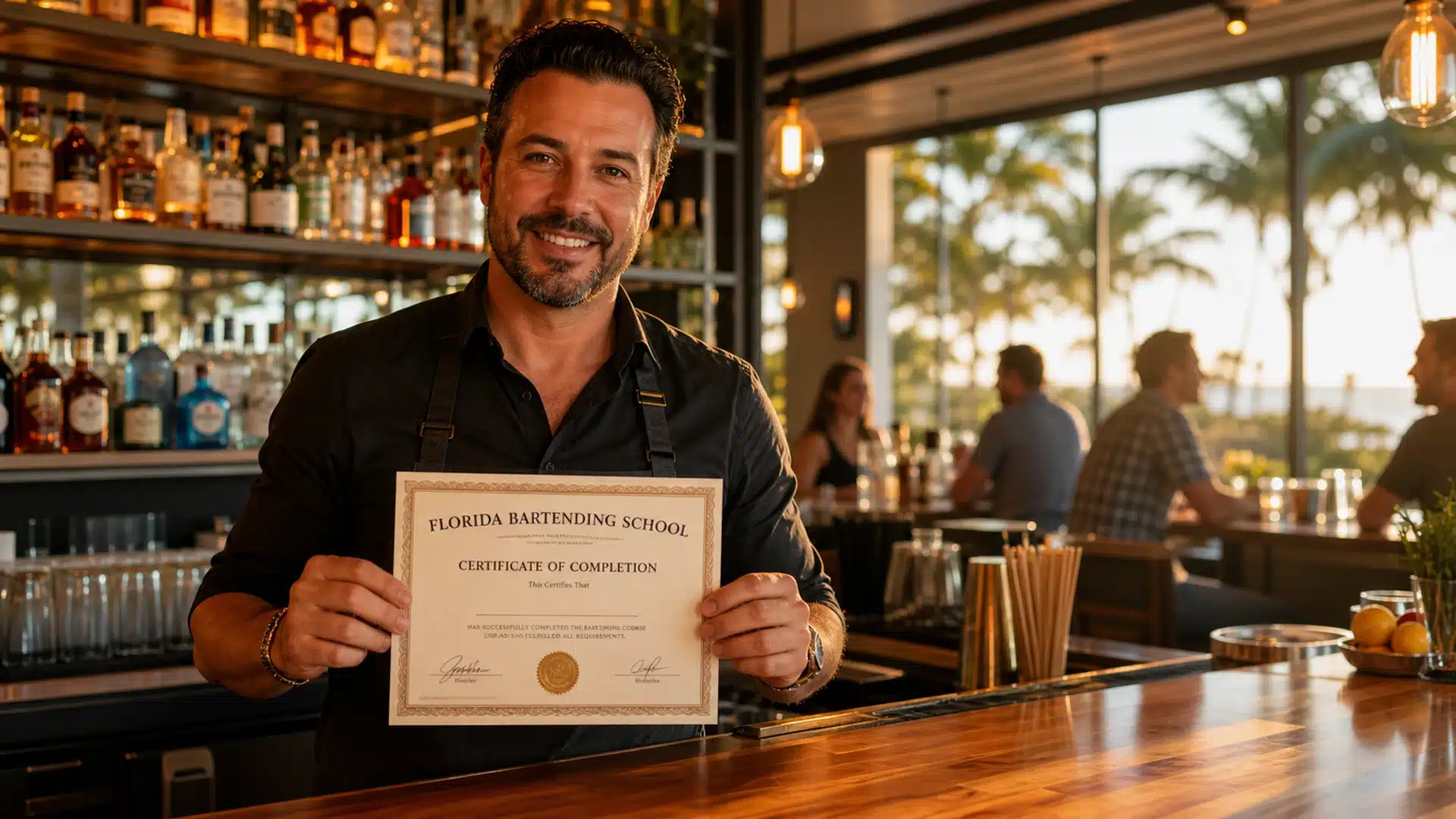
The TABC safe harbor law is one of the most important and most misunderstood legal protections available to Texas alcohol retailers. When it applies, it shields your liquor license from TABC administrative action if an employee illegally sells alcohol to a minor or an intoxicated customer. When it doesn’t apply, you’re exposed to the full force of Texas enforcement.
The difference between “applies” and “doesn’t apply” comes down to a specific set of requirements you have to meet consistently and be able to prove. Most Texas business owners have heard of safe harbor. Far fewer actually qualify for it.
This guide explains exactly what the TABC safe harbor is, what you have to do to claim it, where employers most commonly lose it, and how to make sure your business stays protected.
Key Takeaways
- TABC safe harbor is a legal protection under Texas Alcoholic Beverage Code §106.14(a) and TABC Administrative Rules §34.4
- If you qualify, TABC won’t take administrative action against your license when an employee illegally sells alcohol
- To qualify, all of these must be true: certified staff, 30-day certification window, written policies, no encouragement to violate law, fewer than 3 violations in 12 months
- The seller/server still faces criminal consequences, safe harbor protects the business, not the employee
- Courts have sometimes held that safe harbor doesn’t automatically apply in civil dram shop cases; documentation and consistent enforcement are critical
What Is TABC Safe Harbor?
TABC safe harbor is a legal shield written into Texas state law that protects alcoholic beverage retailers from losing their license when an employee makes an illegal sale. The formal source is Texas Alcoholic Beverage Code §106.14(a), supplemented by TABC Administrative Rules §34.4.
Here’s what it actually says, in plain English:
If an employee illegally sells or serves alcohol to a minor or an intoxicated person, TABC will not take administrative action against the business’s license or permit, as long as the business has met specific safe harbor requirements.
The key phrase is “administrative action.” That includes fines, license suspensions, and license cancellations imposed by TABC. Without safe harbor protection, a single employee mistake can put your entire business at risk. With it, your license stays intact, and your business keeps operating.
What safe harbor doesn’t do:
- It doesn’t protect the employee who made the sale. They still face criminal charges, fines, and potential jail time.
- It doesn’t automatically apply; you have to prove you qualify by meeting every requirement and documenting compliance.
- It doesn’t shield you from civil dram shop lawsuits in every case. Courts evaluate these separately from TABC administrative cases, and the safe harbor defense in civil court requires the same (or higher) standard of proof.
For individual workers, see our TABC certification guide for information on getting certified. For business owners, this page covers what you need to do at the business level.
The TABC Safe Harbor Requirements (All Five)
To qualify for safe harbor protection, your business must meet all of the following conditions. Missing any one of them voids the protection.
1. The Employee Must Hold a Current TABC Certificate
The person who made the illegal sale must have a current, valid TABC seller/server certificate from a TABC-approved provider at the time of the violation. Expired certificates don’t count. Pending certifications don’t count.
Practical implication: You need systems to track every alcohol-serving employee’s certification expiration date. TABC certificates are valid for 2 years, and lapses create liability windows.
2. All Relevant Employees Must Be Certified Within 30 Days of Hire
Every employee who sells, serves, or delivers alcoholic beverages, plus their immediate managers, must complete TABC certification within 30 days of their hire date.
This is stricter than most operators realize. It’s not enough to certify “most” of your staff. Every single alcohol-facing employee, plus their managers, must be covered. If a new hire is in their first 30 days and hasn’t started training, your safe harbor protection is at risk.
Practical implication: Onboarding workflows need TABC certification as a non-negotiable checklist item. Delaying certification to “after the probationary period” or “when they’re scheduled for training” doesn’t cut it.
3. Your Business Must Have Written Responsible Service Policies
The business must have written policies covering responsible alcohol service and consumption, and must ensure that every employee has read and understands them.
What this actually means:
- Documented, physical (or digital) policies
- Policies that cover refusal of service, ID checking procedures, and over-service prevention
- Proof that every employee has reviewed them (signed acknowledgment forms are standard)
A verbal “we expect responsible service” doesn’t qualify. If TABC investigates a violation and asks for your written policies, you need to hand them over the same day.
4. You Cannot Have Directly or Indirectly Encouraged the Violation
The employer cannot have directly or indirectly encouraged the employee to break the law. The Texas Supreme Court has examined this closely in cases like 20801, Inc. v. Parker, and courts have broadly interpreted what counts as “encouragement.”
Examples of what voids safe harbor:
- Pressuring staff to hit alcohol sales quotas that require over-serving
- Punishing servers for refusing service
- Ignoring known violations (tacit approval)
- Bonus structures or rewards tied to alcohol-only revenue
- Management instructing staff to “not be too strict” with IDs
Practical implication: Your compensation structures, performance reviews, and management culture all matter. You can’t claim safe harbor while running a business that functionally rewards over-service.
5. Fewer Than Three Safe Harbor Violations in 12 Months
Safe harbor can only be claimed for up to two qualifying violations within any 12-month period. A third violation within the same period voids protection.
Practical implication: One incident isn’t automatically catastrophic, but a pattern is. Business owners dealing with a second incident should treat it as the last warning before serious exposure.
TABC-approved · Self-paced online course · Instant certificate · Valid 2 years
What Happens After a Violation - The Safe Harbor Process
When an employee is caught making an illegal sale, the process typically unfolds like this:
Step 1: Enforcement acts on the employee.
The employee is usually arrested on the spot or cited, with potential penalties of $100–$4,000 in fines and possible jail time (especially for repeat offenses or sales to minors). Safe harbor does nothing to protect the employee personally.
Step 2: TABC initiates review of the business.
Within a defined window, TABC begins evaluating whether to take administrative action against the business’s license. This is the moment safe harbor becomes critical.
Step 3: Owner or manager completes a safe harbor affidavit.
If you intend to claim safe harbor, the owner or manager must complete an affidavit stating that all safe harbor requirements were met at the time of the violation.
Step 4: TABC verifies your claims.
You’ll need to provide:
- Names, Social Security numbers, and dates of birth for all alcohol-serving employees
- Your written responsible service policies
- Proof that each employee has acknowledged the policies
- Certification records for every employee
TABC will verify certifications directly against its database. Any gaps, expired certificates, unaccounted-for staff, or missing documentation jeopardize your claim.
Step 5: TABC decision.
If your documentation is clean and all five requirements are met, TABC will not pursue administrative action against your license. If there are gaps, you can face fines, suspension, or license cancellation.
Common Ways Businesses Lose Safe Harbor Protection
The law is clear on what’s required. The practical failures are surprisingly predictable:
Expired certifications. An employee who was certified two years ago but never renewed. Their lapsed certificate voids safe harbor for any incident involving them.
Missing the 30-day window. A new hire making sales within their first weeks before completing training. Even a legitimate training backlog doesn’t protect you.
No written policies, or policies that exist only in theory. Policies filed in a drawer that no one has read don’t satisfy the requirement. TABC expects evidence every employee has actively acknowledged them.
Sales quotas that create encouragement. Performance structures that reward alcohol-specific revenue can be interpreted as indirect encouragement to over-serve, especially if servers are disciplined for low numbers.
Pattern of incidents. Three violations in 12 months voids protection. Businesses with repeated issues should assume each subsequent incident carries higher consequences.
Weak documentation. Safe harbor is a defense you have to prove. If you can’t produce records on demand, you lose.
How TABC Certification Connects to Safe Harbor
TABC certification is the foundation of Safe Harbor. Without a current, valid certification for every alcohol-serving employee, none of the other requirements matter; you don’t qualify.
This is why most Texas employers require TABC certification as a condition of employment. It’s not bureaucratic preference. It’s a direct license protection mechanism.
For your staff: Every alcohol-serving employee and their managers need to hold current TABC certificates. Certificates are valid for 2 years, and they must come from a TABC-approved provider.
For new hires: Certification must be completed within 30 days. Building TABC certification into your onboarding process, not just post-hire training, is how compliant businesses avoid coverage gaps.
For renewal management: Certificates expire. Businesses that don’t track renewal dates actively eventually have lapsed staff, and those lapses create windows of unprotected liability. Set reminders 60 days before each employee’s certificate expires.
ServeSmart’s TABC-approved online certification course costs $11.99 per employee and takes about 2 hours per person. Many employers pay for their staff’s certification as part of onboarding; it’s a low-cost insurance policy for your license.
Safe Harbor in Civil Court (The Dram Shop Question)
There’s an important distinction between TABC administrative action (the main focus of this article) and civil dram shop lawsuits. A brief note on the civil side:
Texas dram shop law allows third parties, typically victims of drunk driving accidents, to sue alcohol providers who served visibly intoxicated customers. Safe harbor can also be raised as a defense in these cases, but courts evaluate it separately.
Legal analysis has noted that courts have “rarely found the defense to apply” in civil dram shop cases, partly because the “no encouragement” requirement is interpreted broadly in civil court. Even businesses in full compliance with TABC requirements can face civil liability if plaintiffs can show any element of encouragement, explicit or circumstantial.
What this means for you:
- Safe harbor is strongest as protection against TABC administrative action
- It’s a valid but harder-to-win defense in civil dram shop cases
- Civil liability requires separate risk management: liability insurance, documented training, and strict enforcement of over-service policies
This article focuses on the TABC administrative side because that’s the direct license-protection mechanism. For civil liability questions, consult a Texas hospitality attorney.
Benefits of Maintaining Safe Harbor Compliance
Beyond license protection, there are real operational benefits to running a safe-harbor-compliant business:
Lower liability insurance premiums. Many carriers offer reduced rates for businesses with fully certified staff and documented responsible-service policies. The savings often exceed the cost of training.
Reduced staff turnover incidents. Certified employees make fewer mistakes, face fewer disciplinary situations, and generally perform more confidently on the floor.
Stronger community reputation. Responsible service practices build customer trust and reduce the visible incidents (intoxicated guests, confrontations) that damage neighborhood reputation.
Better-trained employees = better service. Training covers customer interaction under pressure, de-escalation, and judgment calls, all of which improve the general guest experience, not just compliance.
Employer safe harbor is a hiring advantage. Candidates who take the industry seriously often prefer working for employers who invest in compliance. Staff retention is measurably higher at compliant businesses.
Bulk purchase options available · TABC-approved · Instant certificates · US-based support
Frequently Asked Questions
TABC safe harbor is a legal protection under Texas Alcoholic Beverage Code §106.14(a) that shields alcohol retailers from TABC administrative action when an employee illegally sells alcohol, if the business meets five specific requirements, including having all alcohol-serving staff TABC-certified.
Safe harbor protects you from TABC administrative action (fines, license suspension, license revocation) when its requirements are fully met. It’s a more limited defense in civil dram shop lawsuits, where courts have historically been stricter about what qualifies. It does not protect the individual employee who made the illegal sale.
The employee will likely be arrested and face criminal penalties, fines from $100 to $4,000, and potential jail time. Your business’s license is protected from administrative action if you’ve met all safe harbor requirements. If you haven’t, you can face fines, suspension, or loss of your license.
All employees who sell, serve, or deliver alcoholic beverages, plus their immediate managers, must complete TABC certification within 30 days of their hire date. Sales made by untrained employees in their first 30 days can put your safe harbor status at risk.
Probably not on their own. TABC expects written policies specifically addressing responsible alcohol service, and expects documented proof that each employee has read and understood them. Signed acknowledgment forms (stored with employee records) are the standard way to document this.
A single qualifying violation doesn’t automatically end your safe harbor protection, but three violations within any 12-month period voids protection entirely. After any violation, review your compliance program immediately to ensure you don’t hit the three-strike threshold.
Yes. The “no encouragement to violate the law” requirement has been interpreted broadly. Compensation structures, performance reviews, or management pressure that reward alcohol-specific revenue targets can be construed as indirect encouragement to over-serve, voiding safe harbor. Safer alternatives are quotas tied to overall revenue or guest satisfaction rather than alcohol volume alone.
Safe harbor can be raised as a defense in civil dram shop cases, but it’s a narrower defense in court than in TABC administrative cases. Businesses serious about civil liability protection should combine safe harbor compliance with liability insurance and strict enforcement of documented policies. Consult a Texas hospitality attorney for specific civil-liability questions.
You can verify any employee’s TABC certification through the TABC Certificate Inquiry system using their name, Social Security number, and date of birth. Certificates become visible in the database within 14 days of course completion. Your training provider (like ServeSmart) also keeps records you can access anytime.
Making TABC Certification Simple for Your Business
If you’re running a Texas alcohol retailer and want to ensure every employee stays current on TABC certification, here’s what a compliant program looks like:
Onboarding: Include TABC certification as a day-one requirement. Before an employee’s first alcohol shift, they should have a completed certificate in hand.
Cost coverage: Many employers pay for employee certifications ($11.99 per person through ServeSmart) as a hiring benefit. This removes friction from onboarding and signals professional expectations.
Renewal tracking: Set calendar reminders 60 days before each employee’s 2-year renewal date. Don’t rely on employees to remember; make it an operational responsibility.
Documentation system: Keep written policies, signed acknowledgments, and certification records in a single, easily-searchable system. When TABC investigates, you need same-day access to all of it.
Bulk certifications: If you have multiple staff members needing certification, ServeSmart can provide bulk options. Contact us for group pricing and roster management.
TABC-approved · Instant certificates · Valid 2 years · Bulk discounts available
Related Resources
TABC Certification Course & Pricing → See ServeSmart’s TABC-approved online course options, bulk pricing, and bundle discounts.
What Is TABC Certification? → A complete guide to TABC certification for workers, what it covers, who needs it, and how it works.
How Long Is TABC Certification Valid? → Track renewal dates, avoid certification lapses, and keep your staff continuously compliant.
How to Become a Bartender in Texas → Career guide for individuals entering the Texas hospitality industry.
The Texas Food Handler 30-Day Rule → Many of your alcohol-serving employees also need food handler certification. Learn the parallel 30-day rule for food handlers and how to manage both timelines together.