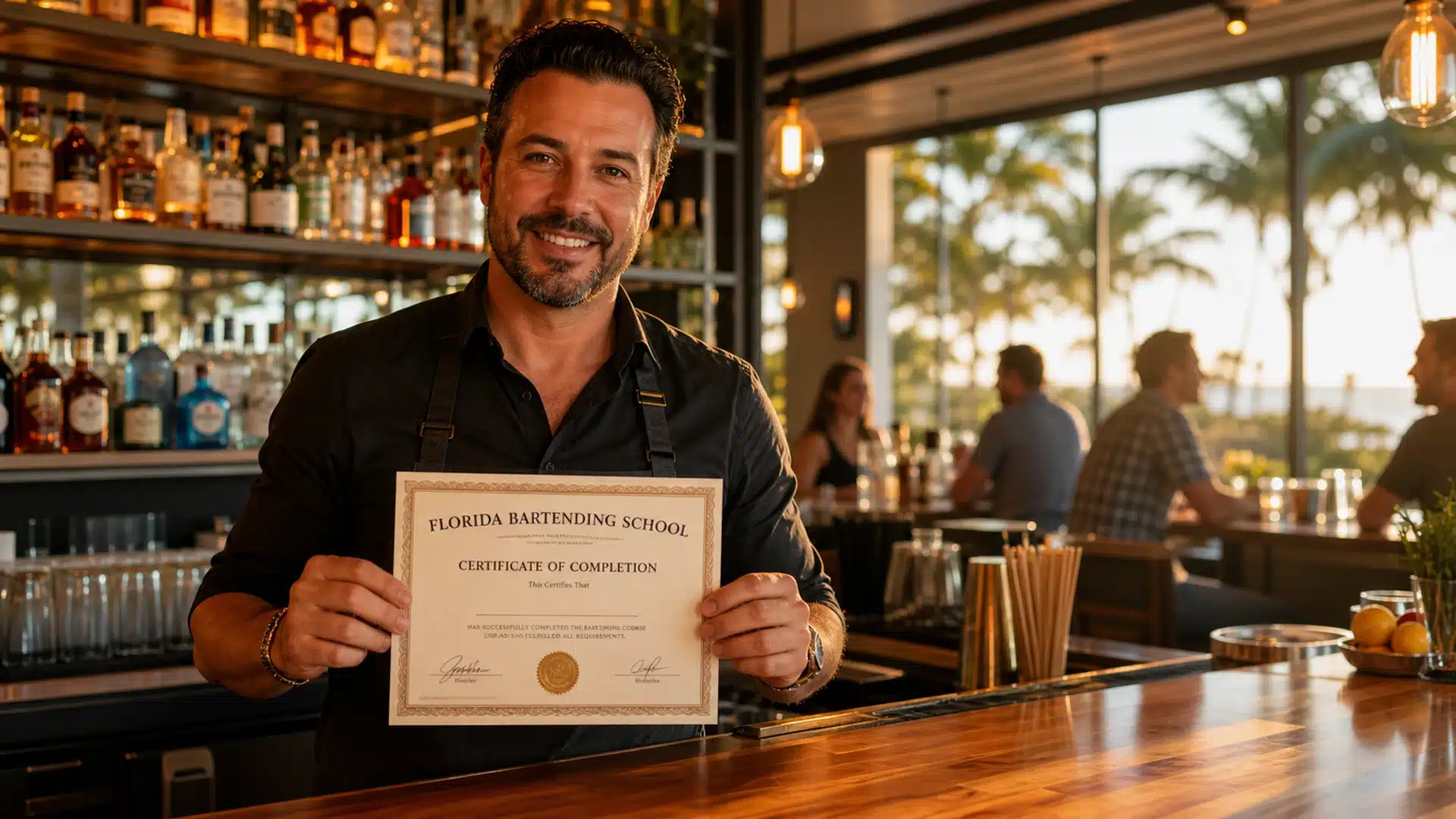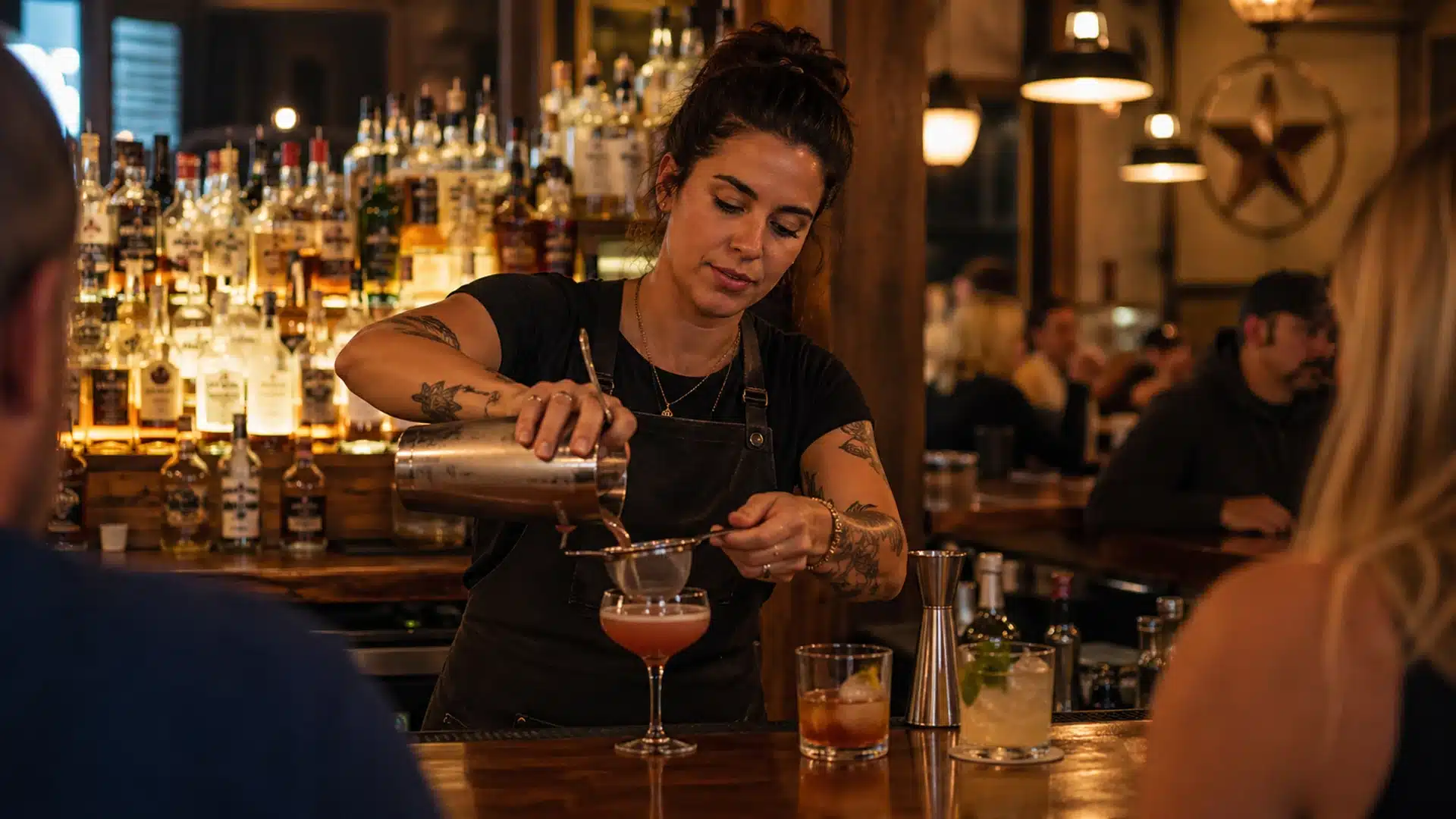
Wondering how to become a bartender in Texas? The process is simpler than most people realize, but it does require a few specific steps, including TABC certification, that are unique to the state.
Bartending in Texas opens up real career opportunities, with a fast path to move up the ranks if you’re committed. While experience is what gets you to the top of the industry, the quickest way to break in is by getting the right training and certifications up front.
With hourly wages between $15 and $25 (plus tips) and flexible schedules, bartending can be a lucrative option, especially if you’re studying on the side or balancing other commitments. If you’re a people person who thrives in a fast-paced environment, a Texas bartending career could be a perfect fit.
Before you start sending out resumes, though, you’ll want to understand the Texas-specific requirements. Regulations vary by state, so deciding whether the Lone Star State is the right place to build your career is the first real decision. Here’s everything you need to know.
What Does a Bartender Do in Texas?
A bartender’s job in Texas goes far beyond mixing cocktails. Yes, you’ll master drink-making and learn your customers’ preferences, but you’ll also be responsible for a lot more.
As a bartender in Texas, your day-to-day responsibilities will include:
- Checking customer IDs to verify they meet the legal drinking age
- Restocking the bar with necessary supplies
- Maintaining a clean and organized work area
- Recognizing signs of intoxication and refusing service when appropriate
- Following and enforcing health and safety regulations
- Handling cash, card, and tip transactions accurately
These responsibilities are consistent across different venues, bars, restaurants, hotels, event spaces, and private catering.
How to Become a Bartender in Texas
You can become a bartender in Texas by following these 6 steps:
Step 1 — Make Sure Your Age Meets the Requirements
According to Texas law, the minimum age to sell or serve alcohol depends on the type of business. For bars and restaurants where alcohol is consumed on-site, you must be 18 years of age or older to serve or bartend.
If you’re under 18, you can still sell alcohol at grocery stores, convenience stores, or other places where it’s intended for off-premise consumption, but you can’t bartend until you turn 18.
Step 2 — Complete Your TABC Certification
This is the step most Texas employers care about. While Texas law doesn’t technically require TABC certification to bartend, the overwhelming majority of bars, restaurants, and hotels require it before your first shift, and for good reason.
Under Texas’s safe harbor law, employers who hire TABC-certified staff are protected from losing their liquor license if an employee makes a mistake on the job. That protection only applies if the employee is properly certified through a TABC-approved provider. As a result, certification isn’t just a preference; it’s a hiring filter.
ServeSmart’s online TABC certification course takes about 2 hours and covers:
- Texas alcohol laws and regulations
- Preventing sales to minors and intoxicated customers
- Proper ID verification and spotting fake IDs
- Recognizing the signs of intoxication
- Your legal responsibilities as a seller-server
- Safe harbor protection for your employer
Once you pass the final exam, you get a PDF certificate that you can show employers the same day. Your certification is valid for 2 years statewide. If you want to see the full list of TABC-approved providers, you can check the official Texas Alcoholic Beverage Commission website.
TABC-approved · 2-year certification · Instant certificate · Mobile-friendly
Step 3 — Gain Relevant Serving Experience
If you have your TABC certificate but no bartending experience yet, the fastest path forward is to gain hands-on experience in a related role.
Starting as a server is the single best first step. You’ll learn how to interact with customers under pressure, manage multiple orders at once, and handle the flow of a busy restaurant, all skills that translate directly to bartending. Most restaurants promote bartenders from within their serving staff, so getting your foot in the door as a server often puts you on a direct path behind the bar.
Apply to restaurants that have active bar programs, not just quick-service spots. The closer you work to the bar, the more you’ll pick up by osmosis.
Step 4 — Advance Your Skills as a Barback
After server experience, the next step is usually a barback role. Barbacks work directly behind the bar, supporting the bartenders, restocking, prepping garnishes, managing inventory, handling kegs, and keeping the bar running smoothly during busy shifts.
This is where you’ll pick up the practical skills that turn a server into a bartender:
- Inventory management and stocking
- Drink preparation and garnish prep
- Equipment handling (kegs, draft systems, glass washers)
- Speed and efficiency under pressure
- Bar workflow and mise en place
Even if there isn’t an open barback position at your current bar, ask your manager if you can shadow or help out during busy shifts. Showing initiative is often what gets you moved up when a spot opens.
Step 5 — Strengthen Your Interpersonal Skills
Soft skills are just as important as the technical ones. Making customers feel welcome and comfortable is a core part of the job, and it’s often what separates good bartenders from great ones.
The essential soft skills to develop include:
- Empathy — Understanding your customers’ mood and responding appropriately
- Conflict resolution — Handling difficult situations calmly and professionally, including refusing service
- Communication — Engaging with customers, taking orders accurately, and remembering repeat guests
- Multitasking — Managing multiple drink orders while maintaining great customer interactions
- Reading the room — Knowing when a regular wants to chat vs. when they want to be left alone
These skills are what make you a memorable bartender rather than just a functional one, and memorable bartenders build the kind of regular clientele that leads to bigger tips and better shifts.
Step 6 — Consider Additional Certifications for Career Growth
Pursuing additional certifications can set you apart from other candidates and open doors to higher-paying roles.
Consider adding:
- A mixology course to learn advanced cocktail techniques, classic recipes, and flavor pairing
- A bar management course if you want to move toward supervisory or management roles
- Texas Food Handler certification — often required at venues that serve food alongside alcohol. See how to get one →
- Wine or spirits education (like WSET or Court of Master Sommeliers courses) for fine dining and upscale venues
As you build your skills and credentials, you’ll unlock higher-paying opportunities and roles in better venues, which can mean the difference between $35K and $60K+ per year.
How Much Do Bartenders Make in Texas?
Texas bartenders earn competitive wages, especially when you factor in tips. Here’s what the current data shows:
- Base pay: Around $16.54 per hour on average (per Indeed data)
- With tips: Most bartenders earn $20–$30+ per hour in busy establishments
- Annual range: Roughly $35,000–$60,000 per year depending on venue, location, and experience
- Top-tier venues: High-end bars, hotel lounges, and event spaces can push earnings well above $60,000 annually
Bartender Earnings by City
The Houston and Dallas-Fort Worth metro areas rank in the top 5 nationally for bartender employment, which generally correlates with better wages and more opportunities:
- Houston-The Woodlands-Sugar Land metro: ~10,240 bartenders employed (BLS data)
- Dallas-Fort Worth-Arlington metro: ~9,230 bartenders employed (BLS data)
- Austin: Smaller market but highly competitive wages due to tourism and nightlife density
- San Antonio: Growing hospitality market with expanding bartending opportunities
Pay varies significantly by establishment type. A hotel rooftop bar in downtown Austin will pay differently than a neighborhood pub in a smaller market, but across the board, certified bartenders with experience tend to earn at the higher end of the range.
Start Your Texas Bartending Career Today
The single biggest thing separating you from a bartending job is TABC certification. Once you pass your course, most Texas employers will take you seriously as a candidate, and with the right entry-level experience, you can be pouring drinks within a matter of weeks.
ServeSmart’s TABC-approved online course takes about 2 hours and costs $11.99. Pass the exam, download your certificate, and start applying the same day.
TABC-approved · 2-year certification · Instant certificate · Mobile-friendly
Frequently Asked Questions
A TABC (Texas Alcoholic Beverage Commission) certification is valid for 2 years from the date you complete the course. After that, you’ll need to renew it to continue serving alcohol legally. Renewal means completing the same course again, paying the fee, and passing the final exam; there’s no shorter refresher option. Learn more about TABC certification validity →
Start by getting your TABC certification so you’re ready to serve from day one. Then apply for entry-level positions like barback or server to gain hands-on experience. Networking with bartenders and offering to help during busy shifts can also move you up faster.
In Texas, you must be at least 18 years old to serve or bartend at establishments where alcohol is consumed on-site, such as bars and restaurants. Some employers may set their own higher age requirements. If you’re younger than 18, you can still work in places that sell alcohol for off-premise consumption (like grocery or liquor stores), but you can’t bartend until you reach 18.
Yes. You can bartend in Texas at 18 as long as the establishment serves alcohol for on-site consumption, like a bar or restaurant. That said, some employers prefer to hire bartenders who are at least 21. Getting your TABC certification and building experience in related roles (barback or server) can significantly improve your hireability, regardless of age.
Texas bartenders typically earn between $15 and $25 per hour including tips, with many experienced bartenders at busy venues earning more. Actual earnings depend on location, experience, and venue type. High-end bars, casinos, and busy restaurants often deliver higher tips, while smaller venues may pay less. Cities like Austin, Houston, and Dallas tend to pay the most due to higher customer traffic and demand.
Texas doesn’t issue a state-level bartending license. What most employers mean when they ask for a “bartending license” is TABC seller-server certification. Completing a TABC-approved course like ServeSmart’s gives you everything you need to legally serve alcohol in Texas.
Related Resources for Texas Bartenders
TABC Certification Course & Pricing → See ServeSmart’s TABC-approved course options and bundle discounts.
What Is TABC Certification? → A complete breakdown of TABC certification — what it covers, who needs it, and why it matters.
How Long Is TABC Certification Valid? → Learn when your certification expires and how to renew without gaps.
Texas Food Handler Certification → Many Texas hospitality roles require this in addition to TABC. See the requirements and get certified.