If you’re starting a job in Washington’s hospitality industry (restaurant, bar, grocery store, tasting room, or banquet hall), knowing the difference between a Class 12 vs Class 13 MAST permit isn’t just useful, it’s the difference between what you’re legally allowed to do on shift and what you’re not.
Washington State requires every alcohol server to hold one of two permit classes based on age. Class 13 is for ages 18-20 and limits you to serving beer and wine under supervision. Class 12 is for ages 21 and older and grants full bartending and supervisory rights. The training and exam are identical for both; the difference is entirely in what each permit lets you do on the job.
This guide covers what each permit authorizes, who needs which one, how to upgrade from Class 13 to Class 12 when you turn 21, and the penalties for working under the wrong class. New to MAST entirely? Start with the full Washington MAST permit guide for what the permit is, who needs one, and how to get certified.
Key Takeaways
- MAST permits are required by Washington law for anyone serving, mixing, or supervising alcohol service
- Class 13 MAST Permit (also called a “server permit”) is for ages 18–20, serve beer and wine only, no spirits, must be supervised
- Class 12 MAST Permit (also called a “mixologist permit”) is for ages 21+, full bartending and supervisory rights
- Training and testing are identical for both; certification is valid for 5 years
- Class 13 holders can upgrade to Class 12 for free once they turn 21, without retaking the course
What Is a MAST Permit?
MAST stands for Mandatory Alcohol Server Training. It’s a legal requirement in Washington for anyone who serves, sells, mixes, or supervises alcohol service at a licensed establishment. New hires have 60 days from their start date to earn their permit, except for tasting events, which require a permit from day one with no grace period.
New to MAST? See the full Washington MAST permit guide for what the permit is, who needs one, and how to get certified.
Class 12 vs Class 13 MAST Permit: Side-by-Side
Washington offers two permit classes. Both require the same WSLCB-approved training and the same 40-question exam. The only differences are the age bracket and what you’re authorized to do.
Class 13 MAST Permit (the "Server Permit")
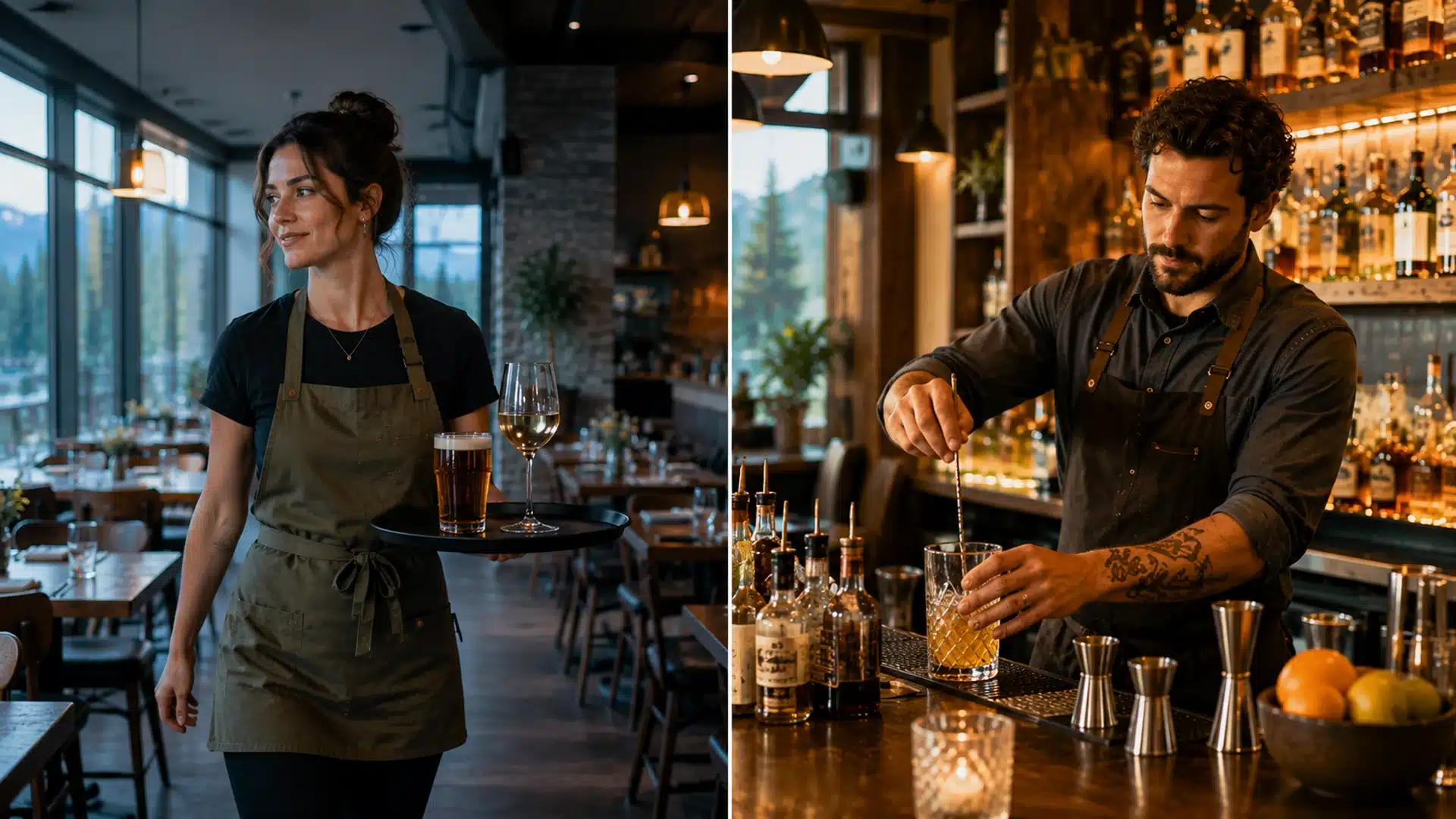
If you’re 18 to 20 years old, you’ll receive a Class 13 permit. The nickname “server permit” reflects what it actually lets you do: serve, not bartend.
What you can do:
- Take alcohol orders from customers
- Deliver beer, wine, or spirits to tables
- Open and pour beer or wine in areas where minors are allowed
- Work the floor at restaurants, cafes, banquet halls, and catered events
What you can NOT do:
- Mix cocktails or pour spirits
- Work behind the bar in a 21+ area
- Supervise other alcohol service staff
Supervision requirement: A Class 12 permit holder must be present during your shift. You cannot work an alcohol-serving role alone as a Class 13.
Validity: 5 years from the date of certification.
What happens at 21: You can upgrade to a Class 12 permit for free without retaking the course. (See the upgrade section below for the process.)
Class 12 MAST Permit (the "Mixologist Permit")
If you’re 21 or older, you’ll receive a Class 12 permit. This is the permit every bartender in Washington needs, and the nickname “mixologist permit” reflects its scope, mixing, pouring, and supervising all fall under it.
What you can do:
- Mix and pour all drinks, including spirits
- Work behind the bar at any licensed venue
- Supervise other alcohol servers
- Work in 21+ venues like bars and nightclubs
- Conduct alcohol tastings at approved retail locations (with a tasting endorsement)
Where you can work: Anywhere that serves alcohol, bars, nightclubs, lounges, breweries, restaurants, hotels, private event venues.
Compliance note: You must carry your MAST permit along with a valid form of ID during every shift. Employers are required to verify permits for all alcohol service staff.
Validity: 5 years from the date of certification.
Ready to earn your Class 12 permit?
WSLCB-approved · 99% first-attempt pass rate · Valid 5 years statewide
Class 12 vs Class 13: Full Comparison Table
| Feature | Class 12 | Class 13 |
|---|---|---|
|
Age requirement |
21+ |
18–20 Yes |
|
Also called |
Mixologist permit |
Server permit |
|
Serve beer and wine |
Yes |
Yes |
|
Mix and pour spirits |
Yes |
No |
|
Work behind the bar |
Yes |
No |
|
Supervise other staff |
Yes |
No |
|
Must be supervised |
No |
Yes (Class 12 required on shift) |
|
Tasting endorsement eligible |
Yes |
No |
|
Upgrade eligible? |
N/A (already top-tier) |
Yes, at 21 |
|
Permit duration |
5 years |
5 years |
|
Must carry on shift |
Yes |
Yes |
How to Upgrade From Class 13 to Class 12
If you got your Class 13 permit at 18 or 19 and now you’ve turned 21, here’s what to do. This is one of the most common questions Washington servers have, and the good news is the process is simple and free.
You have two options:
Option 1: Contact your original course provider. Washington law allows any WSLCB-approved provider to upgrade a Class 13 permit to a Class 12 permit without requiring you to retake the course. Reach out to ServeSmart (or whichever provider issued your original permit) with your request and permit number. The provider will process the upgrade and mail your new Class 12 permit within 30 days. No re-testing, no additional cost.
Option 2: Retake the training. If you can’t reach your original provider, or if your Class 13 permit is close to its 5-year expiration anyway, you can retake the training with any approved provider. This gives you a fresh Class 12 permit with a new 5-year validity clock starting from the completion date, which is the better option if your Class 13 permit has less than a year left.
Which option you choose comes down to timing. If your Class 13 has 3+ years left, the free upgrade is the obvious choice. If it’s close to expiring, retaking the course resets the clock, and you’re good for another 5 years.
For the full retake process, see our MAST permit renewal guide.
Penalties for Working Under the Wrong Class
Washington takes permit class enforcement seriously. A few scenarios where this matters:
A Class 13 holder mixing drinks. If you’re 18–20 and working behind the bar mixing cocktails, that’s a violation, regardless of whether a Class 12 supervisor is present. An individual penalty can reach $500 for a first offense, and your employer faces a separate fine plus possible license suspension.
A Class 12 holder serving without their permit on them. Failing to produce your permit and a valid ID during an inspection can result in a 5-day permit suspension or a $100 monetary penalty for a first violation, escalating to permit revocation after four violations.
A Class 13 holder turning 21 and continuing to work as a bartender without upgrading. The permit doesn’t automatically upgrade when you turn 21; you have to request the upgrade. Working as a bartender on an active Class 13 after turning 21 is the same violation as any other unlicensed bartending.
How to Get Your MAST Permit
Both Class 12 and Class 13 permits come from the same WSLCB-approved course. ServeSmart’s online training takes about 3 hours, costs $19.99, and covers everything the exam tests. You’ll receive the class of permit that matches your age at the time of certification, you don’t choose.
For the full enrollment process, provider options, course format, what the exam looks like, and how your permit arrives, see our how to get a MAST permit guide. If you’re already enrolled and want to pass on the first try, see our MAST test prep guide.
WSLCB-approved · 99% first-attempt pass rate · Valid 5 years statewide
Frequently Asked Questions
Neither is. MAST permits are Washington-specific. If you move to another state, you’ll need to complete that state’s alcohol server training program, for example, the RBS certification in California or the TABC program in Texas.
It’s based on your age at the time of certification. You don’t choose. If you’re 18–20 when you complete the course, you’ll receive a Class 13 permit. If you’re 21 or older, you’ll receive a Class 12 permit. The same course and the same exam qualify you for both.
The exam tests understanding of Washington alcohol laws, ID verification, recognizing intoxicated customers, and server liability. The course covers all six required topic areas, and most students pass on their first attempt with normal preparation. For a topic-by-topic study guide and sample practice questions, see our MAST test prep guide.
No. Your permit is tied to you, not your employer. Class 12 and Class 13 permits stay valid for 5 years regardless of how many jobs you work during that window. Just provide a copy to each new employer.
If the event is at a licensed venue and serves alcohol to the public, volunteers who handle alcohol typically need a MAST permit. The class depends on your age. When in doubt, get certified. The permit costs $19.99 and covers you for five years at any alcohol-serving role in Washington.
No. The supervision requirement doesn’t unlock bartending duties for Class 13 holders. You still can’t mix drinks or pour spirits regardless of who’s supervising. Working behind the bar in a 21+ area is also prohibited. If you want to bartend, you need to be 21 and hold a Class 12.
A tasting endorsement is an add-on for Class 12 permit holders that allows them to conduct alcohol tastings at approved retail locations like grocery stores and farmers’ markets. Class 13 holders are not eligible. Tasting events have no 60-day grace period; you must have the permit and endorsement in hand before working the event.